Walk around any Chinese city and you'll see rows of colorful bicycles lined up on the sidewalks 🚲
Blue, yellow, teal. They all look roughly the same, and they're China's "共享单车" (gòngxiǎng dānchē) — shared bikes. They aren't locked into docking stations; they're just parked along the street. You probably wonder: "Can anyone ride these?"
The answer is yes — and as a foreign tourist, you can ride one on the spot as long as you have Alipay.
I'm 4G (Yongji), a Japanese YouTuber living in Shenzhen, and I find shared bikes incredibly useful:
- 🚇 The metro would mean an annoying transfer
- 🚕 It's not far enough to bother calling a taxi
- 🚶 But it's a bit too far to walk
When you travel in China, you hit this "in-between distance" all the time. Being able to grab a shared bike makes getting around so much easier.
In this guide I'll walk you through exactly how I rode a shared bike in Guangzhou — from scanning the QR code to unlocking, riding and returning it 😊
How bike sharing works in China
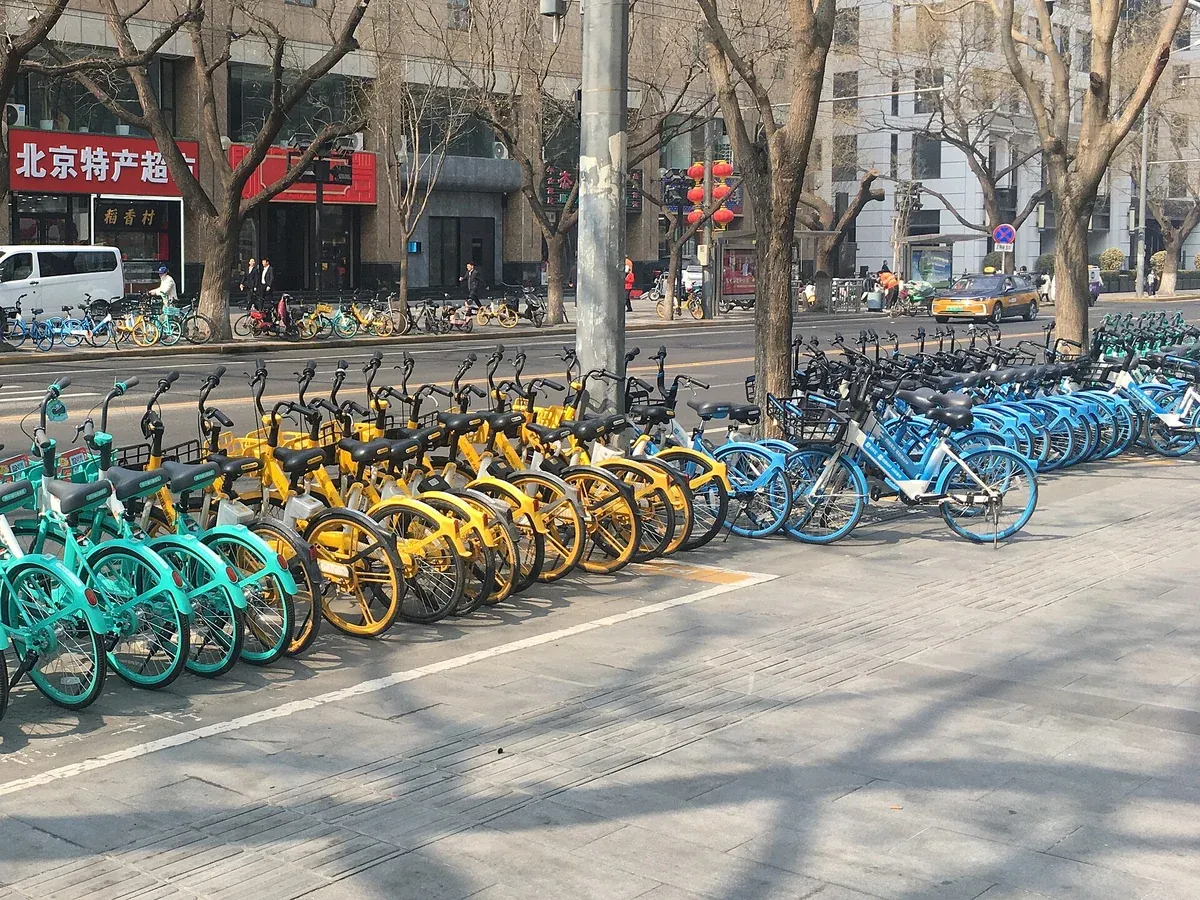
In many countries, bike-sharing schemes make you pick up and drop off at fixed docking stations. China works differently:
Grab a bike wherever you find one, ride it, and leave it wherever you finish (dockless). That's the basic idea.
So bikes aren't only outside metro stations — they're in front of malls, at park entrances and down residential side streets. Wherever you want to ride, there's usually a bike within about 50 meters.
The different colors mean different operating companies, and as a tourist, the one you want is the blue bike. I explain why in the FAQ below 🚲
| Details | |
|---|---|
| 🔓 How to rent | Just scan the QR code on the bike |
| 💰 Price | From 1.5 yuan (about US$0.20) for the first 15 minutes |
| 📍 Where to return | Pretty much anywhere outside no-parking zones |
| 📱 What you need | Alipay with a foreign credit card linked |
| 🆔 Registration | No Chinese phone number or bank account needed |
💡 Shared e-bikes (electric scooter-style bikes) have also spread fast in China. This guide covers the regular pedal bikes. If you want to try an e-bike, check the app's rules first — age limits and ID checks can apply depending on the service and city.
Before you start: link a credit card to Alipay
You pay for shared bikes through Alipay (支付宝).
Many people worry, "Don't I need a Chinese bank account?" You don't.
Foreign tourists can pay by simply linking their own credit card to Alipay.
- ✅ Your home phone number works (no Chinese number needed)
- ✅ No Chinese bank account needed
- ✅ Just add a Visa or Mastercard issued in your country
So if you set up Alipay and link your card before you fly, you can ride a shared bike on the day you land.
💡 I explain how to sign up and link a card step by step in How to Use Alipay in China as a Foreigner. Do that first if you haven't yet.
How to rent a shared bike (what I did in Guangzhou)
Here's the hands-on part — exactly what I did when I rode to a shopping mall in Guangzhou.
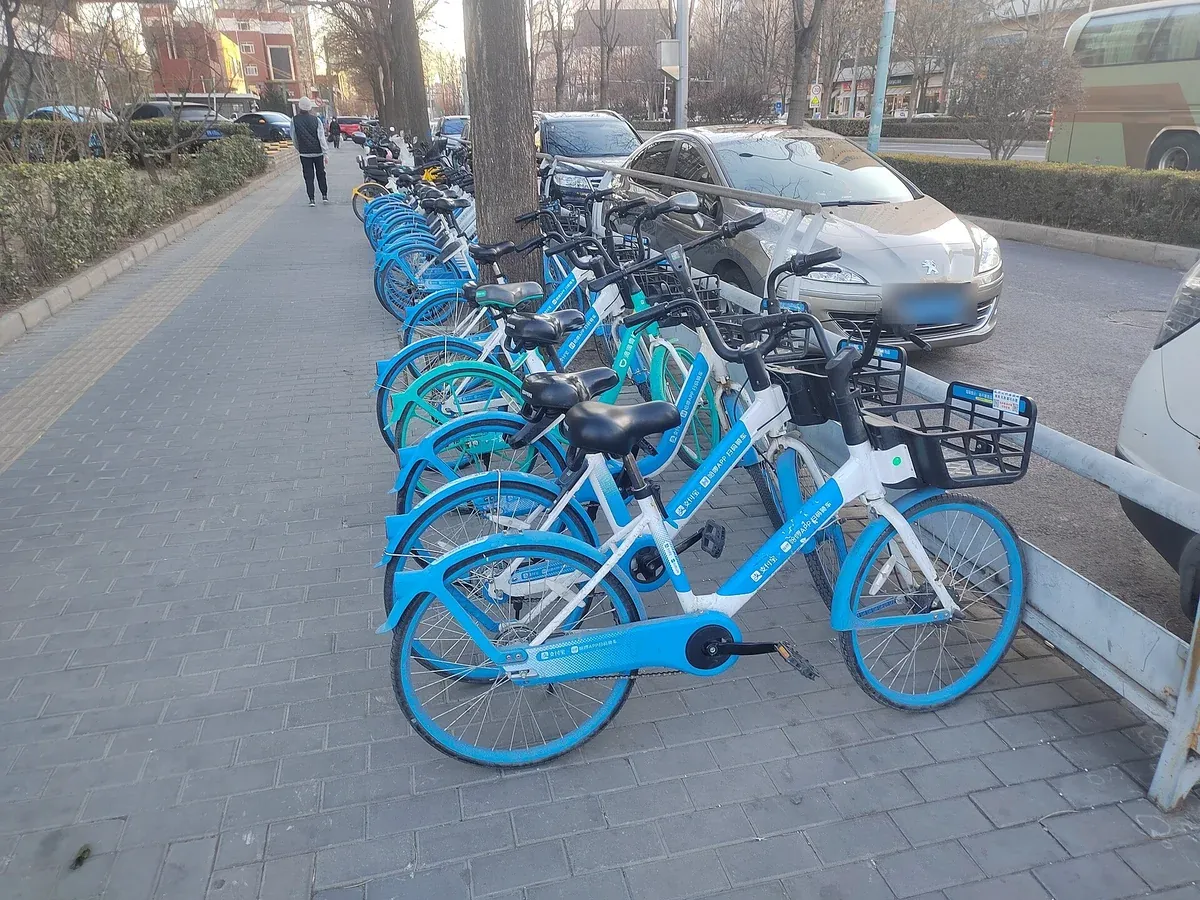
Looking closely at a bike on the street, I saw it said "支付宝" (Alipay) on the frame, meaning you can rent it directly from Alipay. So I gave it a try.
⚠️ Important: As far as I've confirmed, this method works for the blue bikes with the "支付宝" logo. Yellow and teal bikes may not unlock with just an Alipay scan. See "Can I ride any color of bike the same way?" in the FAQ 🚲
From scanning to unlocking took me about 1–2 minutes. Once you're used to it, it takes less than 30 seconds.
⚠️ When I tried, my first card payment failed. It seemed to be a bad connection — I repeated the same steps and it worked fine. If it fails once, don't panic: just try again.
It's cheap — about US$0.20 for 15 minutes
Here's the price plan I got in Guangzhou:
| Ride time | Price | Approx. in USD |
|---|---|---|
| First 15 minutes | 1.5 yuan | about $0.20 |
| Each extra 15 minutes | 1 yuan | about $0.14 |
So even 30 minutes costs only 2.5 yuan (about $0.35). You can cover a good distance in 15 minutes, so most city trips cost just the first 1.5 yuan.
A taxi starts at around 10 yuan, so this is far cheaper — even cheaper than the minimum metro fare (2–3 yuan) 💰
💡 New accounts are sometimes offered discount passes like "unlimited rides for a week". Worth a look if you're staying a while.
Things to watch out for while riding
Once it's unlocked, it's just a normal bike. But Chinese roads have a few things worth knowing.
Use the bike lanes 🚴
Major Chinese cities have dedicated lanes for bikes and e-bikes (非机动车道), marked on the road surface.
You'll see people riding on sidewalks too, but the bike lane is much safer. There's a lot of traffic, including e-scooters, so avoid pushing out into the car lanes.
There are a LOT of riders
When I was riding, the person in front of me was on a shared bike, and the person overtaking me was on a shared bike too. That's how much a part of daily life they are.
The upside: drivers are completely used to shared bikes, so you don't need to be too nervous.
How to return it — park and scan again
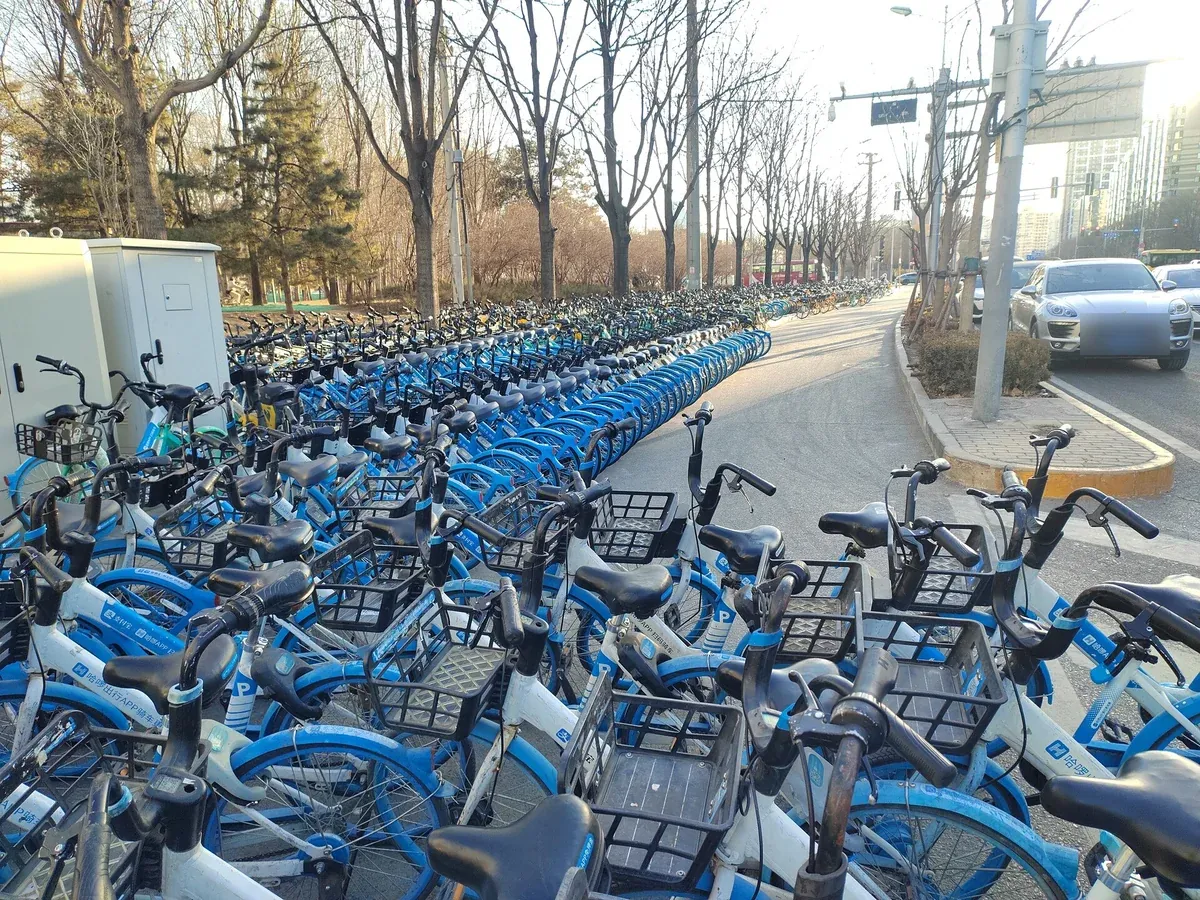
When you reach your destination, return the bike. This was easy too.
Renting and returning are both just "scan the QR code". Once you've done it once, you won't get lost.
Where can I park?
"Dockless" doesn't mean literally anywhere.
The basic rules:
- ✅ Anywhere you could reasonably park a bike is usually fine
- ❌ No-parking zones marked with an "×" on the in-app map are not OK
The app shows no-parking zones as × marks on the map. Outside of those, you can generally park wherever you like.
In other words, you can start and end your ride wherever you want. I think that freedom is the main reason bike sharing took off so much in China.
💡 If in doubt, park where other shared bikes are already lined up. Those spots are effectively parking areas.
FAQ
Q. Can I ride any color of bike the same way?
This is the most important point: no, you can't.
Shared bikes in China are run mainly by three companies, and each uses a different color. Which app you can unlock them with depends on the company.
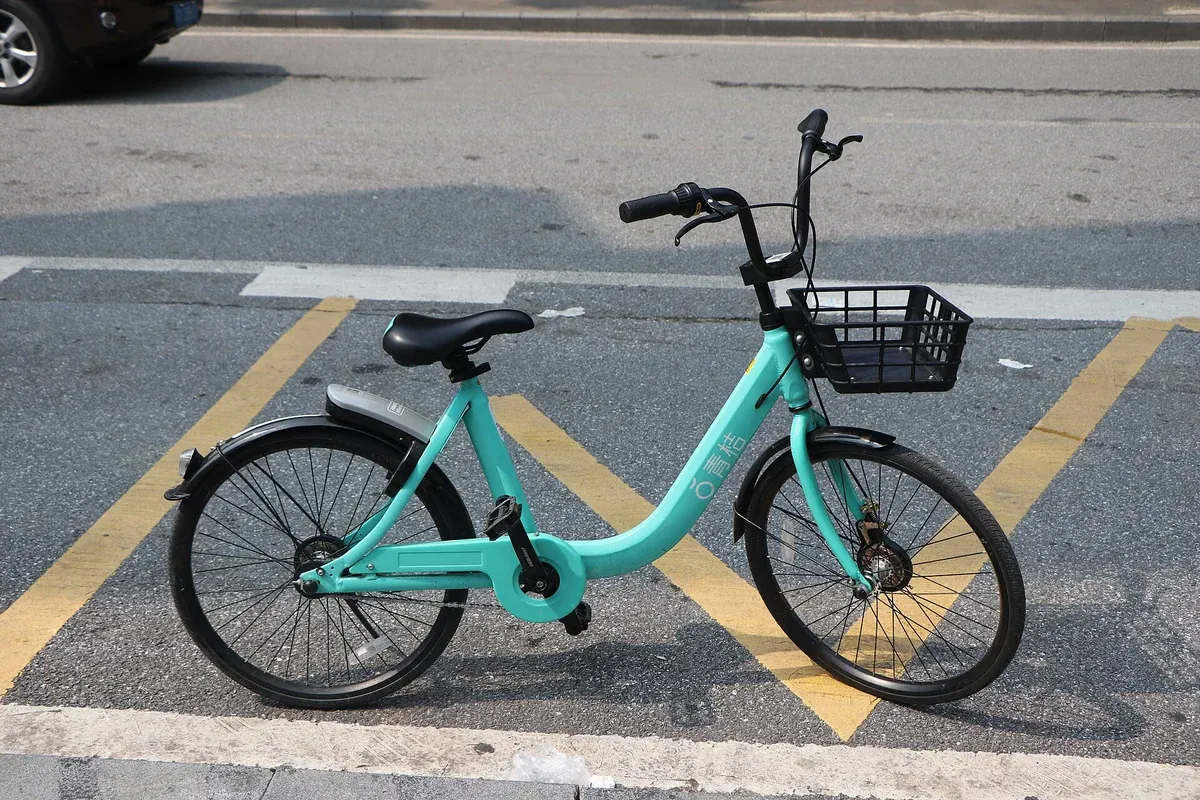
| Color | Service | Operator | Can tourists ride with just Alipay? |
|---|---|---|---|
| 🔵 Blue (light blue + white) | Hellobike (哈啰单车) | Ant Group affiliate (same family as Alipay) | ⭕ Yes (the method in this guide) |
| 🟡 Yellow | Meituan Bike (美团单车) | Meituan | ❌ Difficult |
| 🟢 Teal (blue-green) | Qingju (青桔单车) | DiDi affiliate | △ More hurdles |
The "just scan with Alipay" method in this guide reliably works with the blue bikes (Hellobike).
The reason is simple: Hellobike is part of Ant Group, the company behind Alipay. It's fully built into Alipay as a mini program, so it uses the identity info Alipay already has. That's why you can ride straight away with no extra sign-up. Look for the "支付宝" logo on the frame.
The other two:
- 🟡 Yellow Meituan Bike — Only unlocks through the Meituan app or a WeChat mini program. Scanning with Alipay just tells you to open Meituan. The Meituan app is built around local Chinese services, so it's a high hurdle for short-term visitors
- 🟢 Teal Qingju — It's DiDi-affiliated, so you basically use the DiDi app. It also works through mini programs, but foreigners are sometimes asked to upload a passport for real-name verification (manual review), so you can't always just grab one and go
💡 As a tourist, look for the blue bikes 🔵 All three companies' bikes are mixed together on the street, so pick a blue one with the "支付宝" logo and you can follow this guide on the spot. If there are only yellow or teal bikes around, it's usually faster to walk a bit and find a blue one.
Q. Can I ride without a Chinese phone number?
Yes. If your credit card is linked to Alipay, you can pay using your home phone number. No Chinese bank account needed.
Q. Do I need to pay a deposit?
Deposits used to be required, but when you use bikes through Alipay now, you just pay for each ride. When I rode in Guangzhou, I only paid the ride fare.
Q. What if the bike is broken?
If it won't unlock after scanning, or the brakes or tires are clearly in bad shape, don't force it — switch to another bike. There are usually several nearby, so picking another one is quickest 🚲
Q. I scanned it but the payment won't go through
My first attempt failed too. It's usually a connection issue, so try the same steps again. If it still doesn't work, check that the credit card linked to Alipay is valid.
Q. How are shared e-bikes different?
Shared e-bikes are electric scooter-style bikes, so you don't have to pedal. They can be easier for hilly cities or longer rides, but the rules (age limits, ID verification, where you can park) vary by service and city — check in the app before you ride.
Summary
Key points about bike sharing in China:
- 🔵 Look for the blue bikes (Hellobike) — yellow (Meituan) and teal (Qingju) most likely won't unlock with just an Alipay scan
- 🚲 They're everywhere and dockless — start and end your ride wherever you like
- 📱 Just scan with Alipay — the same action to rent and to return
- 💳 Foreign tourists can use them — link your own credit card to Alipay. No Chinese phone number or bank account needed
- 💰 1.5 yuan (about $0.20) for the first 15 minutes — then 1 yuan per 15 minutes. Far cheaper than a taxi
- 📍 Return it anywhere outside no-parking zones (× on the app map)
- ⚠️ Don't panic if the first payment fails — trying again usually works
"Too awkward by metro, not worth a taxi, too far to walk" — that distance comes up all the time when you travel in China, and shared bikes fill the gap perfectly.
Riding through the city also lets you see everyday Chinese life you'd miss on the metro. Give it a try!
Have a great trip to China 🇨🇳
🎬 Watch the video
I also show the whole process on video on my YouTube channel, "4G's China Life" (the video is in Japanese).
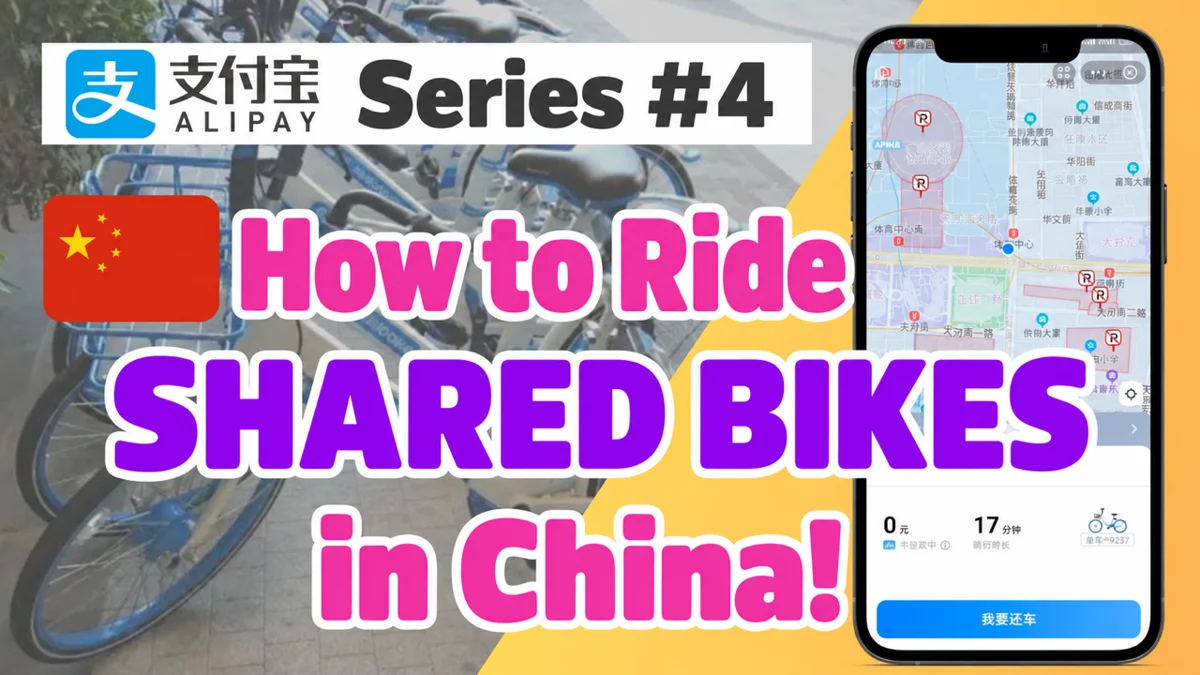
▶ Watch: How travelers can ride shared bikes in China (Alipay series #4)
📚 Read next
- How to Use Alipay in China as a Foreigner — set up Alipay and link your credit card, which you need to unlock shared bikes
- How to Ride the Metro in China — take the metro for long distances and a shared bike for the "last kilometer"
- How to Use DiDi in China as a Foreigner — for rainy days or when you have luggage
Information current as of October 2026. Prices and rules vary by city and may change — check the app for the latest details.
Image credits: Wikimedia Commons — shared bikes in Beijing: Coronium (CC BY-SA 4.0) / shared bike frame: Nissangeniss (CC BY-SA 4.0) / Alipay-compatible shared bikes: CNHowey (CC0) / parking area: CNHowey (CC BY-SA 4.0)