"A taxi with nobody in the driver's seat" — it's not science fiction. In Shenzhen, China, fully driverless taxis (robotaxis) drive on public roads every day 🚗
I'm 4G (Yongji), a Japanese YouTuber living in Shenzhen. Every time I saw one on the street, I thought "I have to try that". So I finally booked a driverless taxi and rode it to my destination.
The verdict: it was amazing. Honestly, it felt smoother than a lot of human-driven taxis.
In this article I'll walk you through how to book, ride and pay for a robotaxi in Shenzhen, step by step from my own ride — and, importantly for visitors, whether you can use it without a Chinese phone number 😊
What is a robotaxi? In Shenzhen, they're just part of the traffic
A robotaxi is a fully self-driving taxi with no driver on board.
In some Chinese cities, including Shenzhen, robotaxis have been commercialized as a service that ordinary people can book and ride.
The service I used is Pony.ai (小马智行, Xiǎomǎ Zhìxíng). You can spot its cars easily on the street — there's a big sensor unit (LiDAR) on the roof.
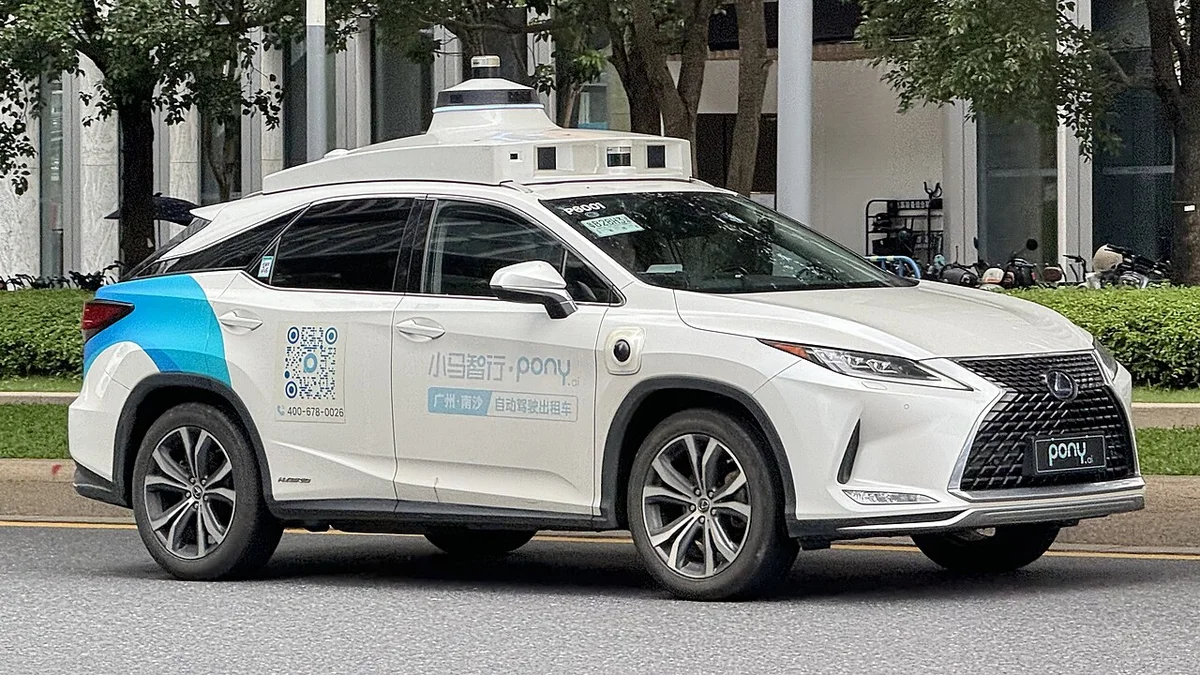
What surprised me was the car itself — look closely and it's a modified Lexus. A Chinese tech company building its self-driving cars on a Japanese car felt a little unexpected.
💡 Walk around Shenzhen and you'll see these white-and-light-blue robotaxis driving around normally. The point is that they're not test cars on a special course — they drive on the same roads, in the same way, as everyone else.
How to book a robotaxi — via a WeChat mini-program
You can book without installing a separate app, using a WeChat (微信) mini-program. Here's how:
You can only book from a yellow-pin pick-up point, so first check whether there's a yellow pin near you. I happened to be standing at a pick-up point, so I could book straight away.
⚠️ The big catch — you'll probably need a Chinese phone number
This is the most important point for travelers.
I use the service with a Chinese phone number registered, so booking was no problem. But with a foreign phone number, you may not be able to book a robotaxi at all.
As of October 2026, I couldn't find any official information from Pony.ai saying that visitors can register with a foreign phone number or a passport. Reports from other travelers are mixed — some say foreign numbers are blocked at the verification step, others say certain non-mainland numbers have worked. The service area is also limited (Pony.ai's fully driverless service in Shenzhen is centered on Nanshan District).
⚠️ If you're a short-term visitor without a Chinese phone number, there's a good chance you won't be able to book a robotaxi. Please read this article as "the steps if you have a Chinese phone number".
If you need to get somewhere, the reliable choice is DiDi (滴滴出行), the ride-hailing app that works for foreigners. You can book DiDi through Alipay's mini-program without a Chinese phone number. I explain how in How to Use DiDi in China 🚕
Waiting for the car — it's popular, so there's a queue
After I pressed the blue button, the car didn't come right away. The screen showed "1 person ahead of you in the queue".
Since there are only so many cars on the road, a queue forms when lots of people book at once. For me, it took about 5 minutes to be matched.
Then the screen changed and asked me to confirm ("Do you agree?"), which I did. It then showed the destination of the passenger currently in the car — in other words, the car would pick me up after dropping off the previous passenger.
After that it said "arriving in 5 minutes", so I waited.
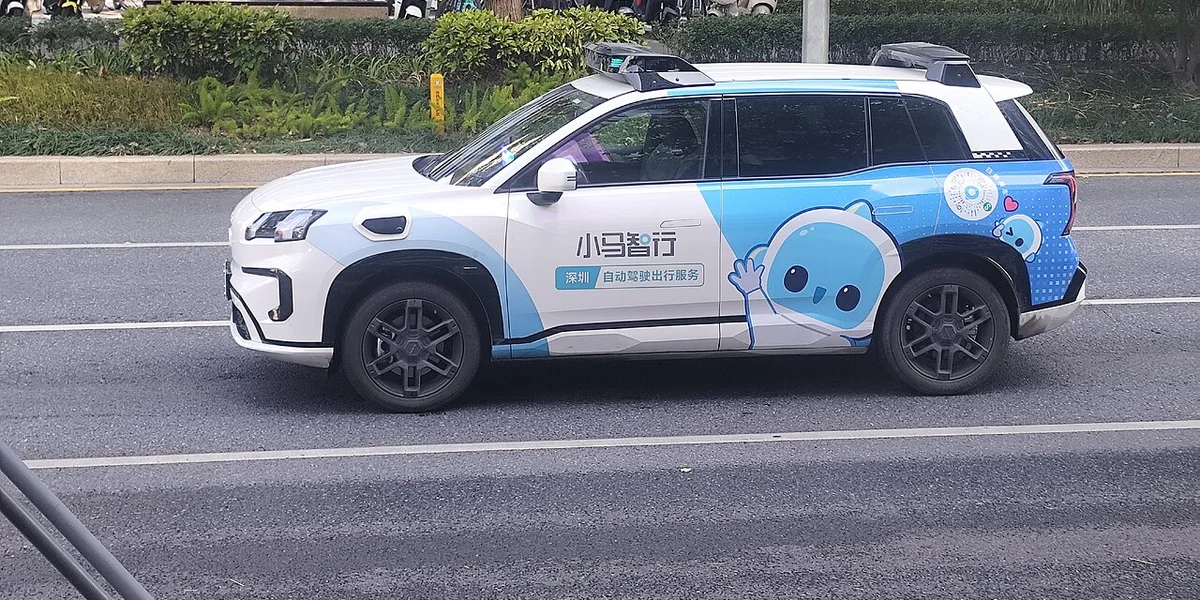
While I was waiting, I could see other people booking robotaxis too. Part of it is the novelty, but they seem genuinely popular with locals.
How to ride — the door won't open by hand
The car arrived. Now the real thing begins.
The moment you open the door and get in, there's really nobody in the driver's seat. Just a steering wheel. No matter how many times you see it, it's striking.
💡 To avoid panicking when the car arrives, just remember two things: "the door opens with the button in the app" and "the car won't move until your seat belt is on and you've entered the last two digits".
What's the ride like? The screen is fascinating
Once you're moving, a screen on the back of the front seat shows how the car sees its surroundings in real time:
- the cars around you
- people crossing the road
- obstacles on the street
All of it is detected and drawn on the screen, which is fun to watch. You can literally see "oh, it spotted that person and stopped" 👀
As for the driving itself — it was surprisingly natural:
- It stops and starts properly at traffic lights
- It moved right to avoid a car coming up from behind
- It drives at a normal speed (not crawling along)
There was none of that "so careful it's slow" feeling — it felt just like a normal taxi, and a comfortable one.
There's another clever feature: the screen has a menu, and pressing the button on the right makes the car find a safe spot nearby and pull over. Handy if you decide you want to get out before your destination.
Arriving — get out, close the door, and it drives off on its own
As we approached the destination, the car slowed and stopped by itself. The screen showed "Please get out".
When I got out and closed the door, the car simply drove off to its next booking. An empty car quietly driving away is a pretty surreal sight.

The fare was 18.4 yuan for 7.1 km (roughly US$2.70 / €2.40). Not expensive at all — more like "this experience, for that price?" 💰
My honest impressions
In a word: I was impressed.
What struck me most wasn't the technology itself, but the fact that it's allowed to drive normally on public roads. In many countries, regulations would make this take much longer.
In that sense, I felt that the speed at which new technology gets put on real city streets is one of China's real strengths right now.

Of course, some people may feel "no driver? That's scary". But to me, the ride was so steady from start to finish that I wondered whether it might even be safer than a human driver.
FAQ
Q. How much does it cost? A. My ride was 7.1 km / 10 minutes for 18.4 yuan (about US$2.70). The fare is shown before you book 😊
Q. Can I book with a foreign phone number? A. I use a Chinese phone number. With a foreign number, you may not be able to book, and I couldn't find official confirmation either way. Travelers without a Chinese number should use DiDi, which reliably works.
Q. Can I book from anywhere? A. No. Only from pick-up points marked with yellow pins on the map, within the service area. Check whether there's a pin near you first 📍
Q. Does it come quickly? A. There are limited cars, so there's often a queue. For me it took about 5 minutes to be matched, then another 5 minutes for the car to arrive.
Q. Can I ride without speaking Chinese? A. The in-car instructions are in Chinese, but all you do is close the door, fasten your seat belt and enter two digits. There's no driver to talk to, so it may actually be easier than a normal taxi.
Q. Can I get out early? A. Yes — use the button on the in-car screen to have it pull over at a safe spot nearby.
Summary
What I learned from riding a robotaxi in Shenzhen:
| Item | Details |
|---|---|
| Service | Pony.ai (小马智行) |
| How to book | Search WeChat (微信) and open the mini-program |
| Pick-up | Only at yellow-pin points on the map |
| Fare | 7.1 km / 10 min for 18.4 yuan (about US$2.70) |
| Waiting time | About 5 min to match + about 5 min for pick-up |
| Opening the door | "Unlock" button in the app (won't open by hand) |
| What to do when you get in | Close the door → seat belt → enter the last two digits of your phone number |
| Catch | You'll very likely need a Chinese phone number |
The Chinese phone number is a real hurdle, but it's the easiest way to experience China's latest technology first-hand. If you're in Shenzhen and meet the conditions, give it a try. It's genuinely exciting 🚗
Watch the video
I also show the whole ride in a video on my YouTube channel, "4G's China Life" (the video is in Japanese).
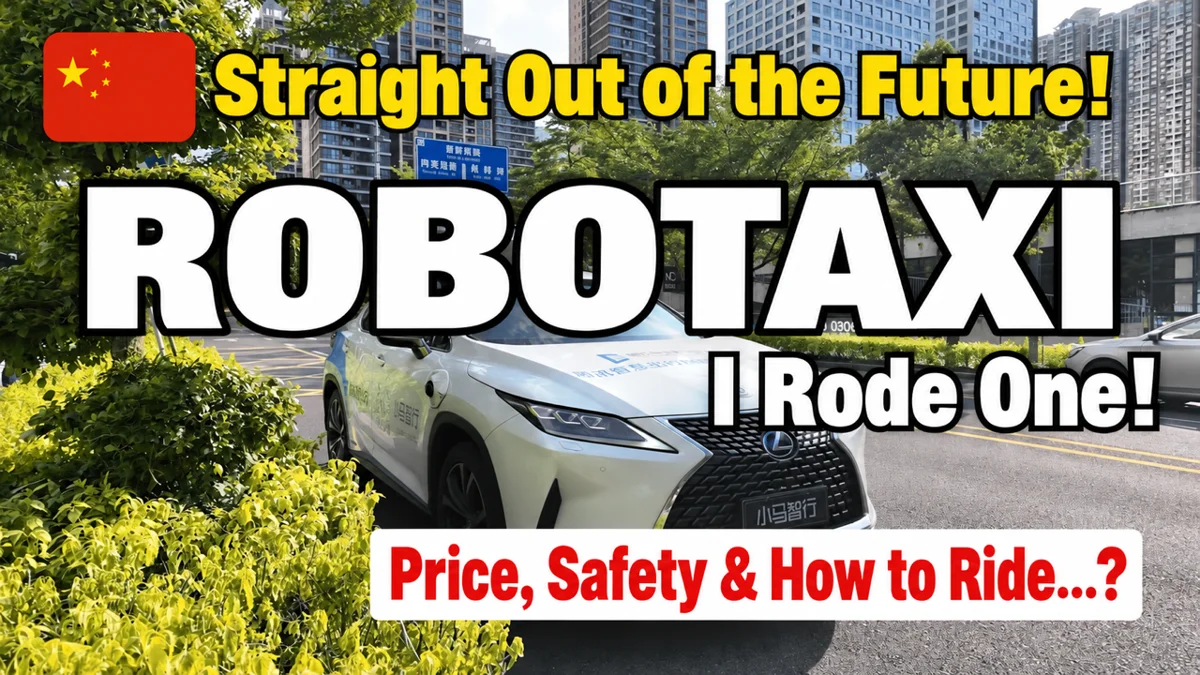
▶ Watch: I rode China's driverless robotaxi (how to ride, explained)
Read next
A robotaxi ride is a "lucky if you can" experience. For actually getting around, the ride-hailing app and the metro below cover almost everything you need in China.
- How to Use DiDi in China — how to call a taxi through Alipay's mini-program, without a Chinese phone number
- How to Ride the Metro in China — three ways to ride China's metros, including Shenzhen's
- 6 Things You Must Know Before Traveling to China — internet restrictions, payments, plugs and other things to prepare before you go
- How to Set Up WeChat Pay as a Foreigner — setting up WeChat itself, which you need for the robotaxi mini-program
Information current as of October 2026. The ride described is from my own experience; service areas, prices and registration requirements may change.
Image credits: Wikimedia Commons — Pony.ai Lexus: S5A-0043 (CC BY 2.0) / robotaxi on a Shenzhen road: HSOMWEI mATIWM Uatnm LUNGA (CC0) / park on Shenzhen Bay: Mx. Granger (CC0) / Futian CBD, Shenzhen: Pathfinbird (CC BY-SA 4.0)