China is a genuinely fun country to travel in. The food is great, cities are convenient, and the metro and high-speed trains are clean and comfortable.
But there are a few things that will catch you out if nobody warns you — and they're usually the small, everyday details that guidebooks don't put in big letters.
I'm 4G (Yongji), a Japanese YouTuber living in Shenzhen, and when friends visit me they almost always get stuck on the same handful of things. So here are the 6 things I really want you to know before you go 😊
| # | What to know | In one line |
|---|---|---|
| ① | 🌐 The internet is restricted | Google, WhatsApp and Instagram don't work as normal |
| ② | 💳 How to pay | It's a cashless country — but don't bring zero cash |
| ③ | 🗣️ Language | Don't expect English to be widely spoken |
| ④ | 🚻 Toilets | You usually can't flush toilet paper |
| ⑤ | 🍜 Restaurant habits | Some places charge for napkins; some regions rinse their dishes |
| ⑥ | 🔌 Electricity | China runs on 220V |
This is my personal list, but every item on it is something you can easily avoid once you know about it. Let's go through them one by one.
① The internet in China is restricted 🌐
The first one is the most important by far.
Services many of us use every day — Google, Gmail, WhatsApp, Instagram, Facebook, YouTube — can't be used normally inside mainland China.
In practice, if you connect to your hotel Wi-Fi and open WhatsApp, nothing loads. Same for Instagram, YouTube and Google. You just get "no connection" errors.
The easiest way to picture it: it's like opening your apps in airplane mode — except you're connected to Wi-Fi.
There are 4 ways around it — pick one
To keep using your usual apps, you need a connection that goes out through a network outside China's restrictions. There are four main options, and you only need one of them.
| Option | Best for | Key point |
|---|---|---|
| 📱 Roaming with your home carrier | People who want zero hassle | Keep your own SIM. Check your plan's roaming price |
| 🌏 China eSIM | Most short-term travelers | Buy online, activate before you fly |
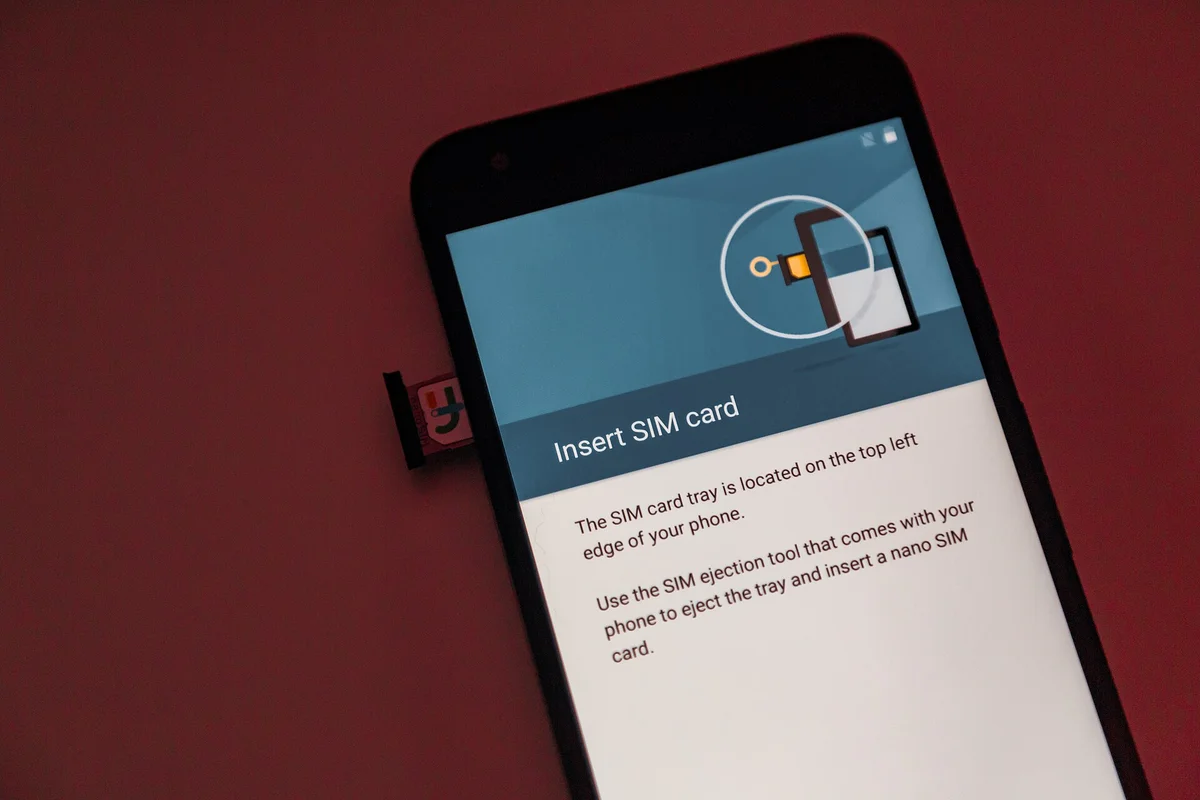
| 📶 Hong Kong SIM card | Budget travelers with an unlocked phone | Physical SIM you swap in |
| 🛡️ VPN | Long stays / heavy data users | No data cap; works on hotel Wi-Fi |
📱 International roaming (keep your own SIM)
Roaming data is routed back through your home carrier's network, so it's generally not affected by China's restrictions — Google, WhatsApp and Instagram usually just work. No SIM swapping, no extra apps.
The catch is price. Some carriers include China in a travel pass or international plan; on others, roaming without a plan can get expensive fast.
⚠️ Check your own plan's international data terms before you leave. Carriers change these often, and roaming on the wrong plan can cost a lot per day 💦
🌏 A China eSIM
If your phone supports eSIM, this is the easiest option for most visitors. You buy it online, scan a QR code, and you're done — no SIM tray, no shipping.
Many China eSIMs connect through Hong Kong or another network outside the mainland, so Google, WhatsApp and Instagram work without a separate VPN. Several providers sell them — compare the data allowance, validity and whether the description clearly says it works with Google/WhatsApp in mainland China.
💡 The golden rule: install and activate your eSIM before you leave home. If you wait until you land in China, you may not have any connection to set it up with.
📶 A Hong Kong SIM card
The classic method: buy a Hong Kong SIM card before your trip and swap it into your phone. Hong Kong isn't subject to mainland China's internet restrictions, so this alone gets your apps working again.
I use one with 12GB for 30 days. It's good value for a short trip — but your phone needs to be unlocked, and you'll be swapping out your home SIM.
🛡️ VPN
A VPN (virtual private network) is, put simply, a way to get past China's restrictions so Google, YouTube and so on work again. There are free and paid ones.
If you want to stream YouTube for hours or you're staying a long time, a VPN suits you better than a data-capped SIM or roaming. It also lets you use Chinese hotel and café Wi-Fi.
⚠️ None of these options is guaranteed to work 100% of the time. The situation changes, and carriers and services change their setups too. Have one main method plus one backup.
Bonus: don't rely on Google Maps 🗺️
Related to this: maps.
Once you've sorted your connection, Google Maps will open — but its accuracy inside China is poor. Pins are often in the wrong place.
Here's what to use instead.
Chinese map apps (the most useful)
- 🟢 Amap (Gaode Maps / 高德地图) — what I use every day. It now has an English version, Amap Global
- 🔵 Baidu Maps (百度地图)
They're incredibly detailed — shop information, reviews, even floor plans of shopping malls. If you want the best tool, pick one of these.
On iPhone, the built-in Apple Maps is fine 🍎
If you'd rather avoid a Chinese app, Apple Maps works well in China. Apple's maps of China use data from AutoNavi — the company behind Amap — so they're far more accurate than Google Maps, and the app stays in your own language.
| Recommendation | In short | |
|---|---|---|
| 🟢 Amap / Baidu Maps | ⭐ Best features | Shop info, mall floor plans, metro exits |
| 🍎 Apple Maps | ⭐ Easiest | Your own language; China data from AutoNavi |
| 🔴 Google Maps | ✕ Not recommended in China | Blocked without a workaround, and inaccurate |
💡 Setting up Amap step by step: Amap (Gaode Maps) Guide for Foreigners
② Set up a payment app before you go 💳
The second one is payments.
China is a cashless society — almost nobody uses cash. So you'll want Alipay (支付宝) or WeChat Pay (微信支付) ready before you arrive.
Both now let you link a foreign Visa or Mastercard, and you don't need a Chinese phone number or bank account. Do the setup while you're still at home.
💡 How to sign up, link your card and pay, with screenshots: How to Use Alipay in China as a Foreigner
But carry a little cash too
Here's the important part: every now and then, a shop or situation won't accept Alipay or WeChat Pay.
When that happens, cash is the only way out. So bring a small amount of Chinese yuan.
Hardly anyone in China pays with cash, but it's not that cash doesn't work — people just don't use it. A little in your pocket makes a big difference to your peace of mind 💰
💡 How much to bring and the cheapest way to get yuan: Do You Need Cash in China?
③ Language — don't expect English to be widely spoken 🗣️
The third one is language.
Outside international hotels, airports and some big malls, English is not widely spoken in China — at restaurants, in taxis and in local shops, assume people won't understand it.
So it helps to learn a few basic Chinese greetings, and to install a translation app for when you really get stuck.
Use a translation app as your interpreter
Most translation apps can speak the translation out loud in Chinese. Type or say "Can I pay in cash?", and the app reads it out in Mandarin. Turn the phone around, let the shop staff speak, and you get the reverse.
⚠️ Google Translate is blocked in China unless you've set up one of the workarounds in ①. Many travelers don't realize this until they're standing in front of a menu. There are good alternatives that work without a VPN — including one built into Alipay.
💡 Which translation apps actually work in China: Best Translation Apps for China
④ Toilets — you usually can't flush the paper 🚻
The fourth one is toilets.
In most Chinese toilets, you can't flush toilet paper.
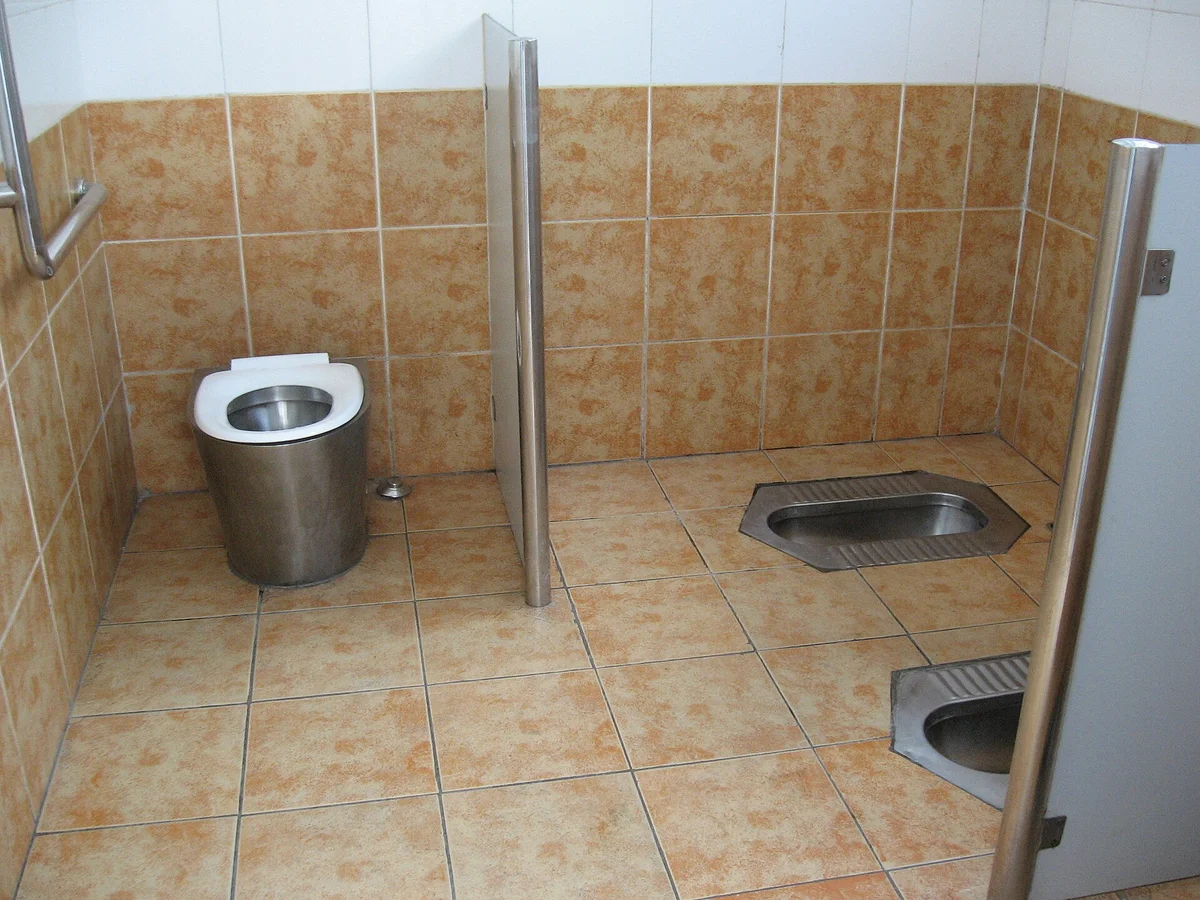
Instead, there's a small bin next to the toilet, and used paper goes in there.
Some places do let you flush, but assume most don't.
Pocket tissues are a must 🧻
On top of that, some toilets have no paper at all.
So pocket tissues are essential. Bring a few packs — if I could only give you one packing tip for China, it might be this one.
⑤ Two restaurant habits to know 🍜
The fifth one is eating out. There are two things that may surprise you.
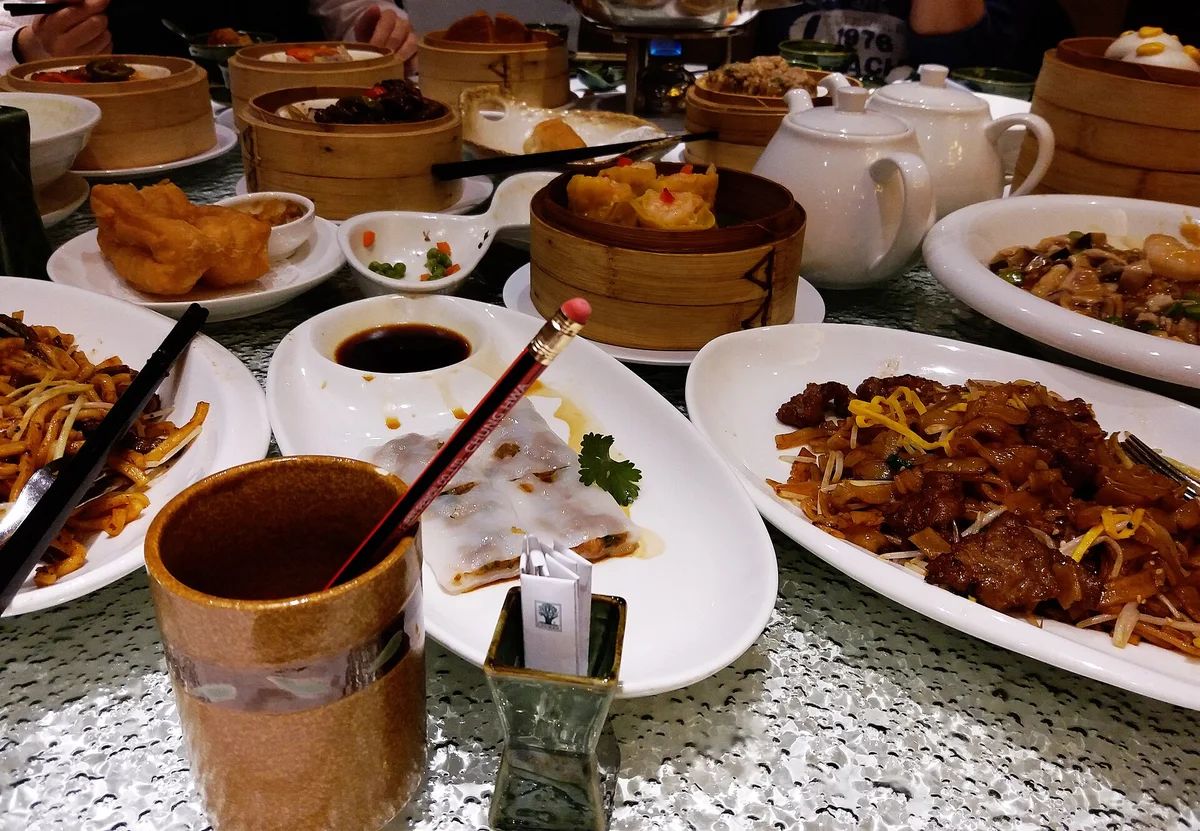
Habit 1: napkins may not be free
Restaurants often have a box of napkins (tissues) on the table, and sometimes these are charged for.
Plenty of places give them for free, but if you use them at a place that charges, they'll appear on your bill — so just keep it in mind.
Habit 2: in some regions, people rinse their dishes before eating
In some regions, people rinse their dishes before the meal. It's not everywhere in China — just in places where it's part of the local culture.
The telltale sign is a large empty bowl on the table.
Sometimes it's hot water, sometimes tea. I've seen this in Guangdong, where I live, and also when traveling in other provinces.
You don't have to do it, but many people feel better if they do. Just remember: a big empty bowl on the table = a "rinse your dishes" restaurant.
⑥ Electricity — China uses 220V 🔌
The last one is electricity.
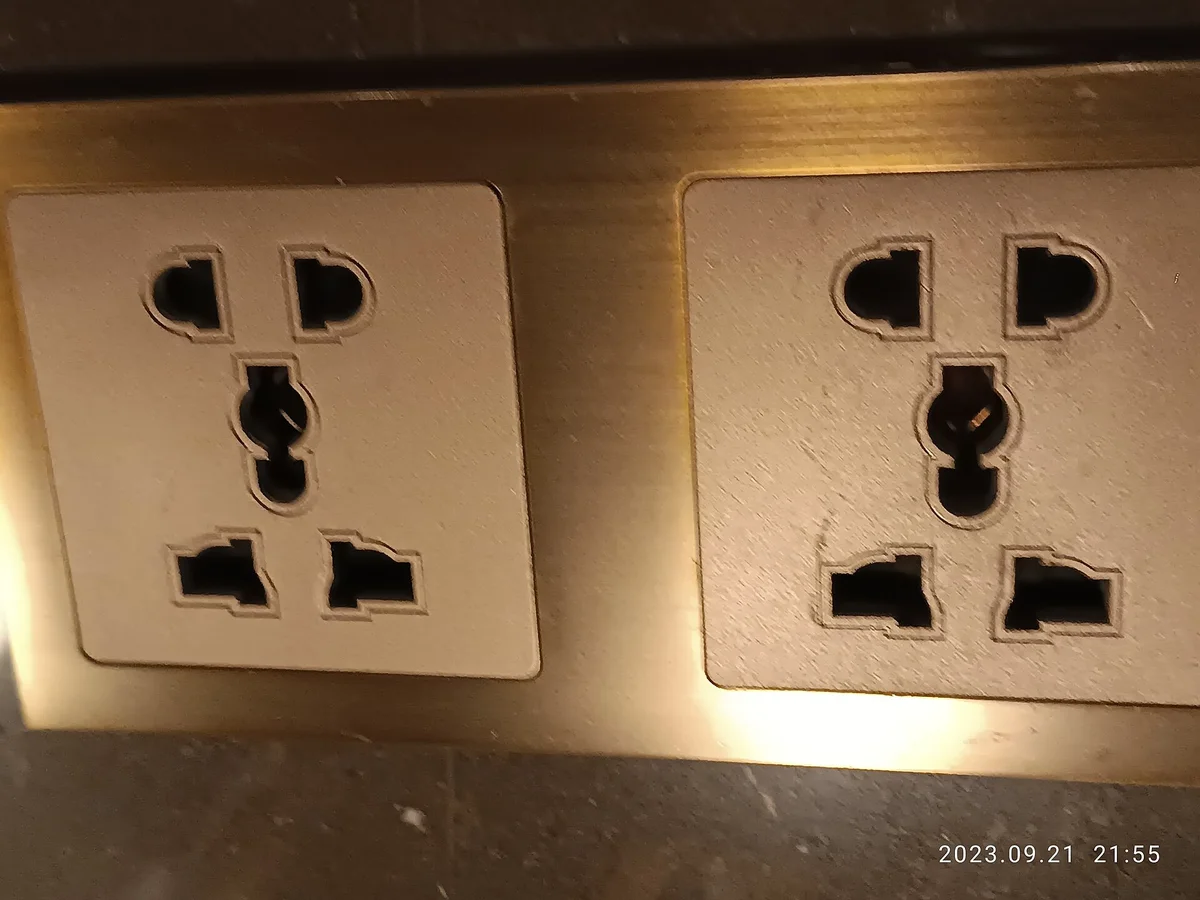
Mainland China runs on 220V, 50Hz.
- 🇺🇸 If you're coming from the US, Canada, Mexico or other 110–127V countries, some of your devices (especially hair dryers, straighteners and shavers) may be 110–120V only. Plugging those into 220V can break them. You'd need a voltage converter — or just leave them at home
- 🇪🇺 If you're coming from Europe or other 220–240V countries, voltage isn't a problem. You only need the right plug adapter
Plugs: bring a universal adapter
Chinese sockets take Type A (two flat pins), Type I (three angled pins) and often Type C (two round pins) in combined wall sockets. A universal travel adapter covers you. (Note: Hong Kong and Macau use Type G — the UK-style plug — so check this if you're passing through.)
Many chargers don't need a converter
Phone and laptop chargers usually handle both voltages on their own. Here's how to check:
Check every device before you pack it.
Summary: 6 things to know before your China trip
- 🌐 The internet is restricted — Google, WhatsApp and Instagram don't work normally. Use roaming, a China eSIM, a Hong Kong SIM or a VPN — one is enough, plus a backup
- 🗺️ Not Google Maps — Amap / Baidu Maps for features, Apple Maps for simplicity
- 💳 Set up Alipay or WeChat Pay before you go — foreign Visa/Mastercard work. Carry a little cash too
- 🗣️ English isn't widely spoken — learn a few phrases and get a translation app that works in China
- 🚻 Don't flush toilet paper — use the bin. Pocket tissues are essential
- 🍜 Some restaurants charge for napkins / some regions rinse dishes — a big empty bowl means rinse
- 🔌 220V — chargers marked "100–240V" are fine; 110V-only devices need a converter. Bring a universal plug adapter
This is my personal list, so there may be things I've missed. If you think something else belongs here, let me know 😊
None of these are a big deal once you know about them. Prepare a little, and enjoy China!
Have a great trip 🇨🇳
🎬 Watch the video
I cover this in a video on my YouTube channel, "4G's China Life" — English and Spanish subtitles are available.
▶ Watch: 6 Things You MUST Know Before Traveling to China
📚 Read next
These guides go deeper on the topics above:
- How to Use Alipay in China as a Foreigner — sign up, link a foreign card and pay, step by step
- How to Set Up WeChat Pay as a Foreigner — the other big payment app, including the "friend verification" step
- Do You Need Cash in China? — how much to bring and the cheapest way to get yuan
- Best Translation Apps for China — what to use now that Google Translate is blocked
- The 10 Apps to Install Before Your China Trip — your pre-trip checklist
- China Arrival Guide: Immigration, Fingerprints and Customs — visa-free rules by nationality and what happens at the airport
- How to Order with a QR Code in Chinese Restaurants — after napkins and rinsing, this is the next thing that confuses visitors
Information current as of October 2026. Carrier plans, eSIM offers and app rules change often — please check the latest details before you travel.
Image credits: Wikimedia Commons — SIM card: Tony Webster (CC BY 2.0) / public toilet in China: China public rest room (CC BY-SA 3.0) / restaurant table: Pauloleong2002 (CC BY-SA 4.0) / power socket: Limsn Shusia Ysmarpoo (CC BY-SA 4.0)