
The first thing waiting for you when you step off a plane in China is immigration 🛂
China has become much easier to visit — dozens of countries can now enter visa-free — yet the question I get most is still: "What exactly happens between landing and getting out of the airport, and in what order?"
The part that surprises people most is fingerprinting. "They take my fingerprints?" "Can I refuse?" If you're used to breezing through e-gates in Europe or Southeast Asia, this step can feel unfamiliar.
I'm 4G (Yongji), a Japanese YouTuber living in Shenzhen, and I fly in and out of China regularly. This guide walks you through everything from leaving the plane to walking out into the arrivals hall, with a focus on fingerprinting. Once you know the sequence, the day itself is just queueing and following signs 😊
🛂 First: can you enter without a visa?
Before the airport process, make sure you know which entry route applies to you. As of October 2026:
| Route | Who | Stay |
|---|---|---|
| 30-day visa-free entry | Ordinary passport holders from the countries on China's unilateral visa-free list — including most of the EU, Switzerland, Norway, the UK, Canada, Australia, New Zealand, Japan, South Korea, Brazil, Argentina, Chile, Peru, Uruguay and several Gulf states | Up to 30 days for tourism, business, family visits, exchanges or transit. Currently valid until December 31, 2026 |
| 240-hour visa-free transit | Citizens of 57 countries (including the United States and Mexico) flying on to a third country or region with a confirmed onward ticket | Up to 240 hours (10 days) within the permitted provinces |
| Visa | Everyone else, or if your trip doesn't fit the rules above | Depends on the visa |
The UK and Canada were added to the 30-day visa-free list from February 17, 2026. The lists and end dates change, so always check the official notice for your nationality before booking.
Sources: Chinese Embassy in the UK, December 2025 / Ministry of Foreign Affairs, February 2026 / Shanghai Government, 240-hour transit / Xinhua via gov.cn, August 2026: 240-hour transit now covers 57 countries and 65 ports
🛬 The big picture: six steps
Here's the order of things at a Chinese international airport:
| # | What happens | Chinese sign | Time |
|---|---|---|---|
| 1 | Walk from the plane | 到达 | 5–15 min |
| 2 | Fingerprints and photo | 指纹采集 | 2–5 min |
| 3 | Immigration | 边检 / 边防检查 | 5–40 min |
| 4 | Baggage claim | 行李提取 | 10–30 min |
| 5 | Customs | 海关 | 1–5 min |
| 6 | Arrivals hall | 到达大厅 | — |
The key point: fingerprinting happens before the immigration desk. It isn't done by the officer — there's a row of self-service machines along the way, and you register yourself before joining the queue.
💡 Allow roughly 40 minutes to 1.5 hours from landing to the arrivals hall. It takes longer during major holidays (Chinese New Year, the October National Day week) or when several wide-body flights land together.
✈️ Step 0: what to do before you leave the plane
A little preparation on board makes the whole process smoother.
The online arrival card
Since November 20, 2025, foreign visitors — with or without a visa — can submit their arrival card online before flying, through the National Immigration Administration (NIA) website, the "NIA 12367" app, or a WeChat/Alipay mini-program. You enter your passport details, flight, purpose of visit and address in China, and receive a QR code.
If you can't do it in advance, you can still fill it in at the airport using a QR code, an on-site kiosk or a paper card. Only a few groups are exempt (for example, permanent residents, group visa travelers, and passengers in 24-hour direct transit who stay in the airport). (Chinese Embassy in the US)
Health declarations are no longer required
The health declaration required during COVID was dropped as a general requirement in November 2023, and it's still not needed in 2026 👌
However, if you have a fever, cough, difficulty breathing or similar symptoms, or have been diagnosed with an infectious disease, you're required to declare it to customs.
🖐️ Step 1: Fingerprints — the step that surprises most visitors
Now the main event.
Since 2018, China has collected fingerprints and a facial photo from foreign nationals entering the country at all airports, seaports and land borders.
If you're used to traveling without this, it might feel strict — but plenty of countries do the same, including the United States and the EU's Entry/Exit System. There's nothing to worry about.
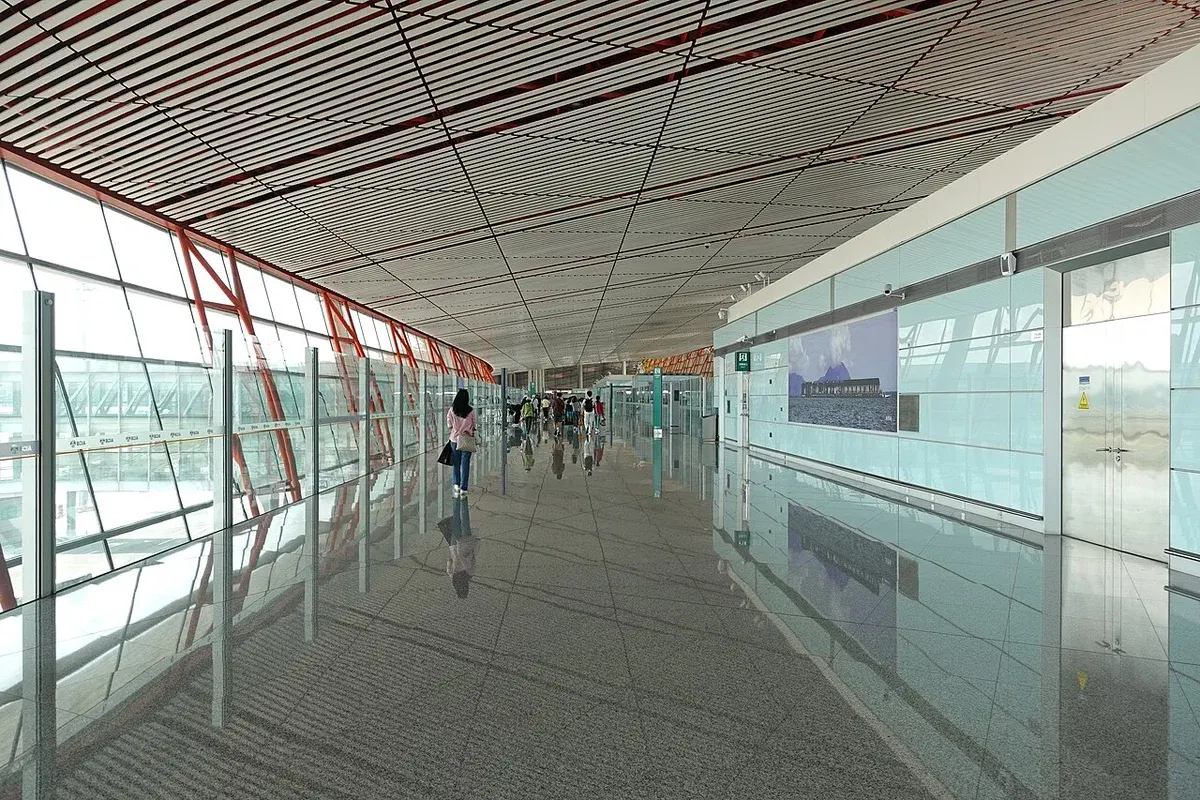
Who has to give fingerprints?
| Group | Fingerprints |
|---|---|
| Foreign nationals aged 14 to 70 | ✅ Required |
| Children under 14 | ❌ Exempt |
| People over 70 | ❌ Exempt |
| Diplomatic passport holders, etc. | ❌ Exempt |
| People who physically can't (e.g. missing fingers) | ❌ Exempt (staff will assist) |
So almost every adult visitor will do it. If you're traveling with children under 14, they don't need to.
⚠️ Don't confuse this with the visa application fingerprint waiver. China has temporarily waived fingerprinting for many short-term visa applications (currently through December 31, 2026), but that's a separate rule from fingerprinting on arrival.
Where are the machines?
As you follow signs from the gate toward immigration, you'll find a row of tall kiosks in the corridor before the immigration desks. These are the self-service fingerprint machines (自助指纹采集机).
Their color and shape vary by airport, but look for a screen showing a passport and a hand. Staff are often standing nearby to direct people.
How to use the machine
It's simple — one or two minutes once you get the hang of it.
If your fingerprints won't read
This trips up more people than you'd think. Error after error while the queue grows behind you is stressful 😅 Try this:
- 🖐️ Dry hands — cabin air is dry. Rub your hands together, or lightly touch your forehead to add a little natural oil
- 💪 Pressing too hard — pressing flattens the ridges. Rest your fingers lightly
- 📐 Fingers out of position — make sure the tips, up to the first joint, are fully on the sensor
- 🙋 Still not working? Ask staff — there's always someone nearby. Point at the machine and shake your head; no Chinese needed
A few failed attempts won't stop you entering. If it really won't work, officers will handle it at the desk.
What about your next visit?
Once you've registered with a passport, you don't technically need to register again with the same passport.
In practice, airports vary. In my experience, many airports send you through the machine again anyway when you join the foreigners' line. Just follow the directions.
And if you renew your passport, you'll register again with the new one 📘
Fingerprints are checked when you leave, too
Easy to overlook: your fingerprints are checked again on departure. At the exit immigration desk you'll be asked to place your fingers on a sensor — it takes a few seconds 👋
⚠️ No photos in immigration
Please take this seriously: photography is prohibited in immigration and customs areas. Raise your phone to photograph a fingerprint machine and you will be stopped.
That's also why there's no photo of the machines in this article — people ask me to take one, but it's simply not allowed 🙇 Keep your phone in your pocket.
🛂 Step 2: Immigration (边检)
After fingerprinting, it's time for the immigration desk.
Join the "Foreigners" line
The lines are split:
- 🇨🇳 Chinese citizens (中国公民)
- 🌏 Foreigners (外国人 / Foreigners)
- 🎫 Hong Kong, Macau and Taiwan residents (港澳台居民)
Signs are in Chinese and English, so head for "Foreigners".
💡 The Chinese citizens' lanes use automatic gates and move fast; the foreigners' lanes are staffed and slower. This is usually the longest wait in the airport — 30–40 minutes when flights arrive together. If you have a connection, leave plenty of time ⏰
The self-service e-gates for foreigners are for long-term residents with permanent residence or residence permits, not short-term visitors.
What you'll be asked
At the desk, hand over your passport, open at the photo page, then follow the officer's instructions:
- 📷 Look at the camera — remove hats, sunglasses and masks
- 🖐️ Place your fingers on the sensor if asked (sometimes you aren't)
- 📱 Show your arrival card QR code if asked — in practice the officer can usually see it in the system, so it's rarely requested
Questions, if any, are simple:
| Common question | How to answer |
|---|---|
| Purpose of your visit? | "Sightseeing" or "Business" is enough |
| How long are you staying? | "Five days", etc. |
| Where are you staying? | Show your hotel name (notes or screenshot) |
| When are you leaving? | Showing your return or onward booking is the surest answer |
You don't need to speak Chinese. Simple English works, and often you're stamped through without a single question 😊
💡 Entering on 240-hour visa-free transit? Tell the officer and have your confirmed onward ticket to a third country ready to show — it's a condition of that policy.
Your entry stamp matters at hotels
After the check, your passport gets an entry stamp. It isn't just a souvenir: Chinese hotels check your entry stamp page along with your photo page at check-in to register your stay with the police (临时住宿登记). More on that in Can Foreigners Stay at Any Hotel in China? 🏨
🧳 Step 3: Baggage claim (行李提取)
Next, collect your checked bags. Signs say "行李提取" (Baggage Claim) in Chinese and English.
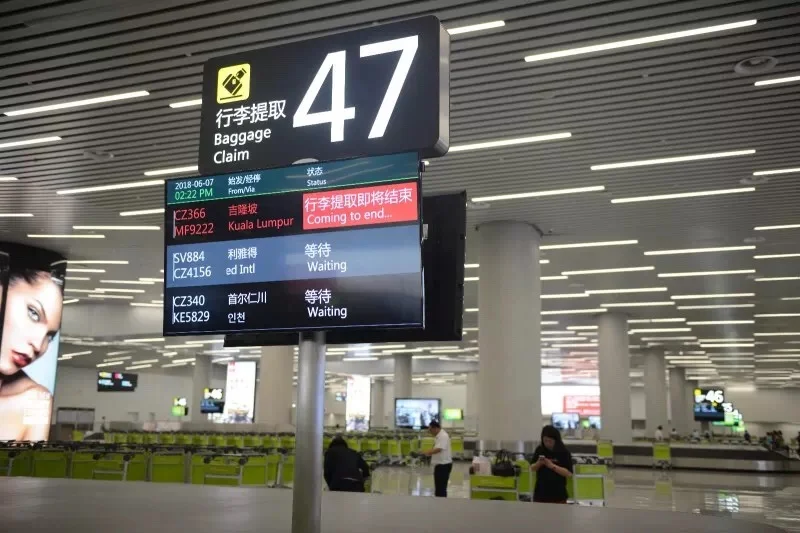
Find your flight number and belt number on the screens, then head to that carousel.
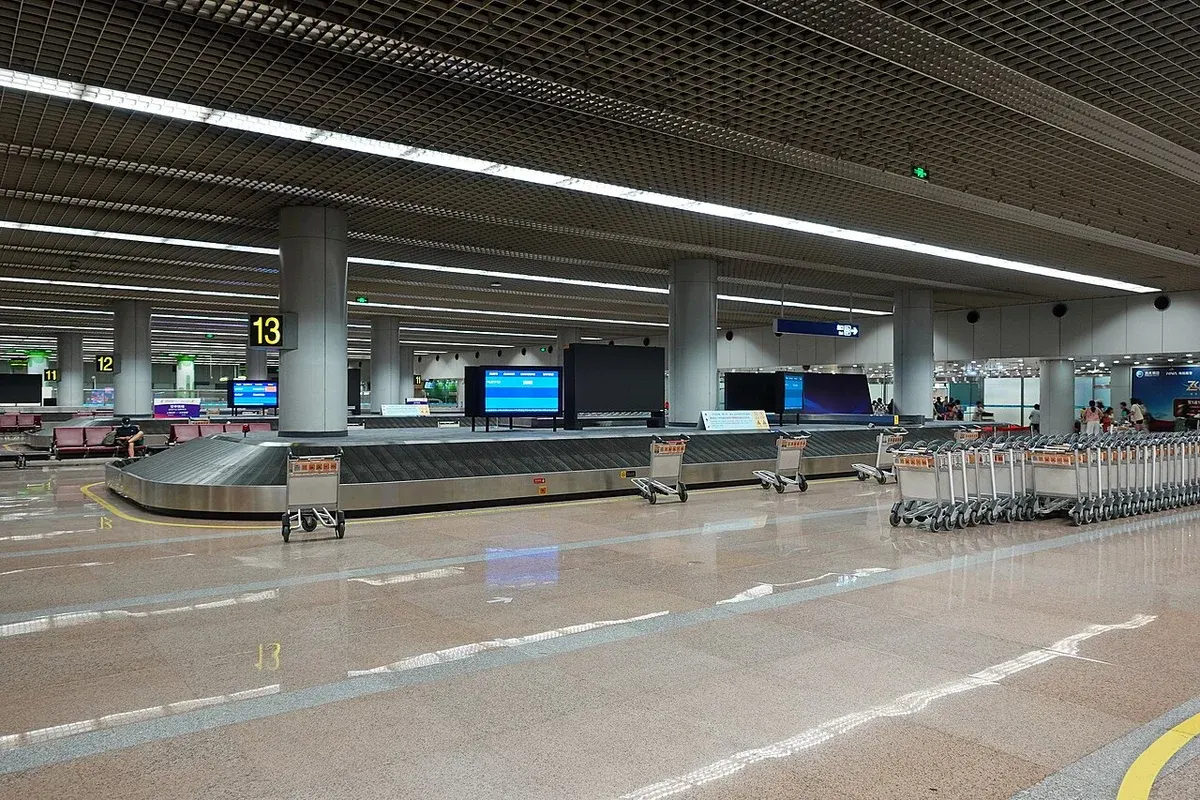
Trolleys (手推车) are by the carousels and generally free at Chinese airports 🛒
💡 Chinese airports are huge. At some — like Beijing Capital T3 or Shanghai Pudong — you'll take an automated shuttle train to baggage claim. Just follow the signs 🚈
🛃 Step 4: Customs (海关) — green channel if you have nothing to declare
Customs is the last stop, and for most visitors it's a walk straight through.
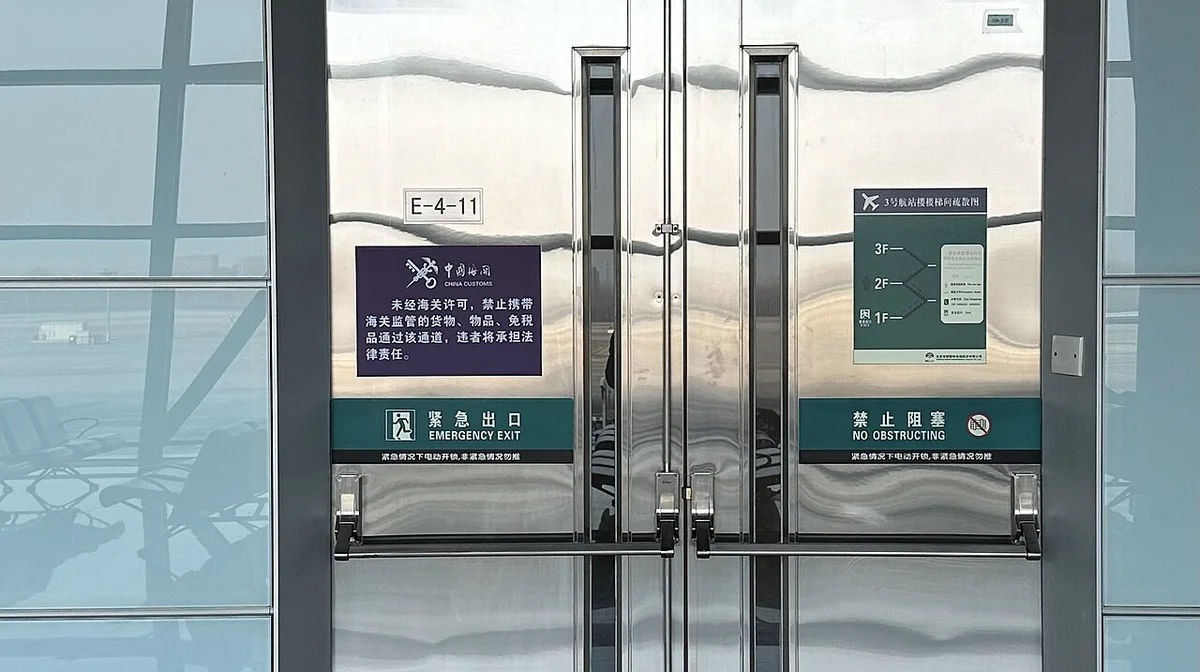
There are two exits:
- 🟢 Green channel (无申报通道 / Nothing to Declare)
- 🔴 Red channel (申报通道 / Goods to Declare)
Almost all tourists use the green channel. Your bags may be X-rayed, then you walk out.
When you need to declare
| Item | Declare if you exceed |
|---|---|
| Personal items to be left in China (non-residents) | Total value of CNY 2,000 |
| Cash in Chinese yuan | CNY 20,000 |
| Cash in foreign currency | US$5,000 equivalent |
| Alcohol (12% ABV or more) | 1,500 ml |
| Cigarettes | 400 cigarettes |
A typical tourist won't come close. Cameras, laptops and other things you're bringing for your own use and taking home again aren't counted. The CNY 2,000 limit mainly matters if you're bringing lots of gifts for people in China 🎁 (These figures come from official Chinese customs guidance — e.g. Shanghai's customs guide for inbound passengers. Allowances are lower if you arrive from Hong Kong or Macau.)
Declaring online in advance
If you do need to declare, you can do it in advance through the WeChat mini-program "海关旅客指尖服务" (search those characters in WeChat). Enter your passport, flight and items to get a QR code, then show it in the red channel — much easier than a paper form 📱
Prohibited and restricted items
China is strict about fresh food and meat. Bags are X-rayed even in the green channel, so don't leave anything in by mistake:
- 🥩 Meat and meat products (ham, sausage, jerky, ready meals containing meat)
- 🥛 Some dairy products
- 🍎 Fruit, vegetables, seeds, seedlings and plants
- 🐟 Raw seafood
- 💊 Large quantities of medicine (your own personal medication is fine)
Watch out for snacks, instant noodles and ready meals that contain actual pieces of meat.
⚠️ Connecting to a domestic flight? Check your power bank
Not strictly immigration, but important if you're flying on within China.
Since June 28, 2025, power banks without China's 3C certification mark have been banned from domestic flights. Most power banks sold outside China don't carry it — and other certifications such as UL aren't accepted as substitutes.
- ✈️ International flights into China: not currently covered by this rule
- 🇨🇳 Domestic flights within China: power banks without a clear 3C mark may be confiscated
Reports differ on whether international departures from China are also affected, so check with your airline. (Shenzhen Daily / EyeShenzhen) 🔋
🚪 Step 5: Three things to do in the arrivals hall
You made it through customs 🎉
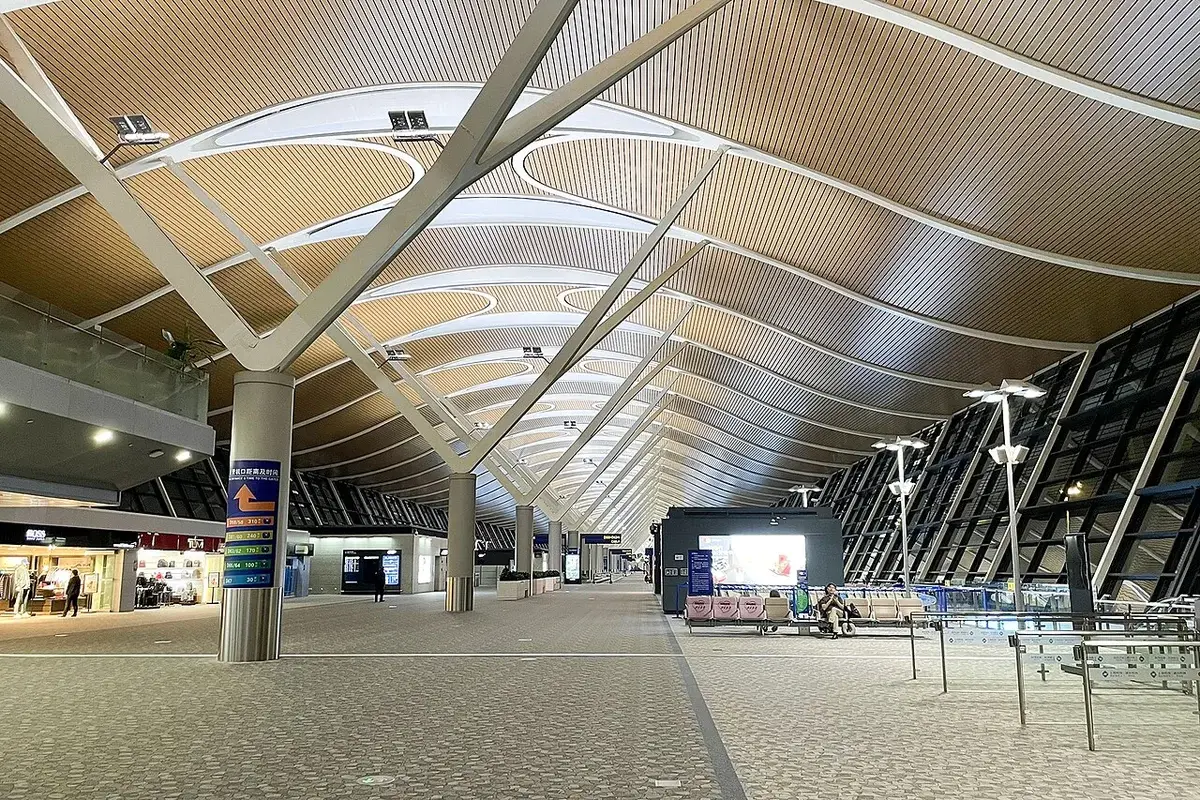
But this is where your China trip really begins. Before walking out, sort out these three things:
Getting online comes first. Without data, your maps, ride-hailing and translation apps won't work. Airport Wi-Fi often requires SMS verification with a Chinese number, so don't count on it 📵
More detail:
- 💳 Payments → How to Use Alipay in China as a Foreigner
- 🚇 Getting into town → How to Ride the Metro in China / How to Use DiDi in China
❓ FAQ
Q. Can I refuse fingerprinting? A. Not really ❌ It's a legal requirement for entry, and refusing may mean you're not admitted.
Q. Do children need to give fingerprints? A. Not if they're under 14 👶 Children 14 and over register like adults.
Q. I'm traveling with an elderly parent. Do they need to? A. People over 70 are exempt. Age is read from the passport, so you don't need to say anything.
Q. I registered on a previous trip. Do I need to queue again? A. Officially no, but some airports send you through the machine again. Follow the signs. A new passport means registering again.
Q. What about entering by land from Hong Kong or Macau? A. Yes, fingerprinting applies there too 🚏 Land border crossings have the same machines.
Q. I'm only transiting. A. If you connect between international flights without leaving the international transit area (typically within 24 hours), you don't go through immigration. If you leave the airport or connect to a domestic flight, you go through normal immigration, including fingerprints. If you want to explore during a longer layover, look into the 240-hour visa-free transit policy above.
Q. Nobody asked for my arrival card QR code. Is that okay? A. Yes — if you submitted it, the officer can see it in the system. I've entered many times and have never actually had to show the QR code 😅 Keep the screenshot handy anyway.
Q. Can I use my phone in the immigration area? A. Looking at your screen (e.g. to check your hotel address) is fine. Taking photos is not 📵
Q. When are the longest waits? A. Chinese New Year and the National Day holiday (from October 1), and late afternoon to evening when many long-haul flights land.
📌 Summary
- 🛬 The order: walk from the plane → fingerprints → immigration → baggage → customs → arrivals hall
- 🖐️ Fingerprinting happens before immigration, at self-service machines. Required for ages 14 to 70
- 🧾 Check for the "complete" screen (or slip), then join the Foreigners line
- 🛂 Expect simple questions — purpose, length of stay, hotel. No Chinese needed
- 🛃 Nothing to declare? Walk through the green channel. Leave meat and fresh fruit at home
- 📵 No photos in immigration
- 🚪 In the arrivals hall: internet, payments, transport
Once you know the flow, it's just following the signs. At the fingerprint machine I spend a minute or two — and people who were nervous usually say, "Wait, that's it?"
Have a wonderful trip to China 😊
📚 Read next
- 🏨 Can Foreigners Stay at Any Hotel in China? — why the entry stamp matters and how hotel registration works
- 💳 How to Use Alipay in China as a Foreigner — set up payments before you fly
- 🚇 How to Ride the Metro in China — the cheapest, most reliable way from the airport into town
- 🎒 Essential Apps for Traveling in China — what to install before you go
Information current as of October 2026. Entry rules change — please check official sources (the Chinese embassy or consulate in your country and the National Immigration Administration) before you travel.
Image credits: Wikimedia Commons — Guangzhou Baiyun International Airport international arrivals exit: Tim Wu (CC BY-SA 4.0) / Shanghai Pudong International Airport T2: Windmemories (CC BY-SA 4.0) / Beijing Capital International Airport T3 arrivals corridor and T2 baggage claim: 颐园居 (CC BY-SA 4.0) / Guangzhou Baiyun T2 baggage claim sign: AirportStudio (CC BY-SA 4.0) / Beijing Capital T3E China Customs sign: Zheng Zhou (CC BY-SA 4.0)