You arrive in China, walk into your hotel bathroom and turn on the tap. Then your hand stops.
Wait — can I drink this?
I'm 4G (Yongji), a Japanese YouTuber who has lived in China for more than three years, now based in Shenzhen. Every time friends visit from abroad, this is the question they ask. Most people vaguely know that "you can't drink the tap water", but then get stuck on what about brushing my teeth? Ice? The water restaurants bring you?
In this guide I'll sort out everything travelers and new residents actually wonder about water and drinks in China. The short answer: don't drink the tap water — but once you know the rules, there's nothing to worry about 💧
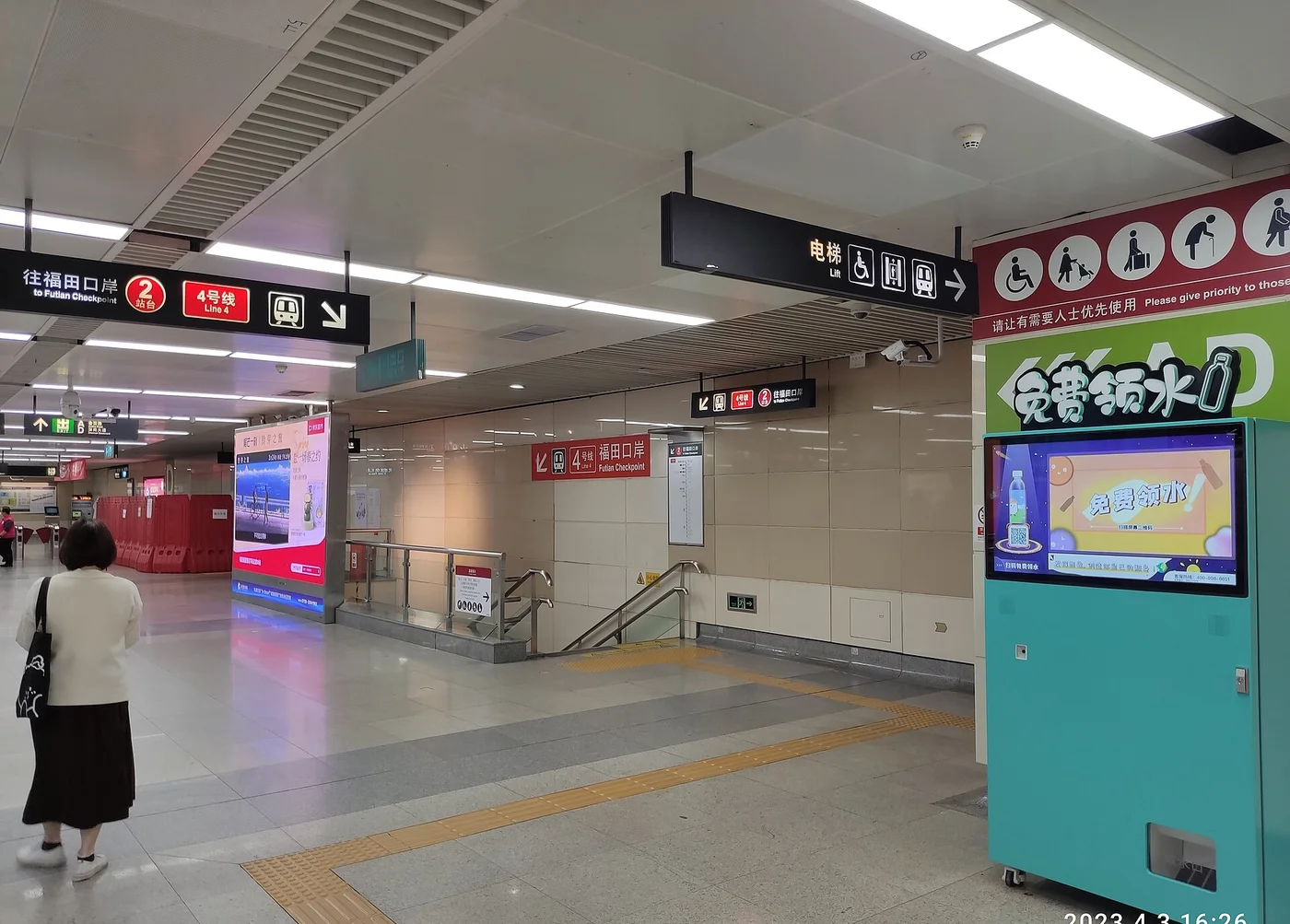
The photo above is a Shenzhen metro station. The green machine on the right is a "免费领水" machine — free water. Scan the QR code on the screen and a bottle of water drops out, free of charge. You can't drink the tap water, but water itself is incredibly easy to get. That sums up China's water situation pretty well.
💧 Quick reference — water in China
Before the details, here are the answers:
| Situation | Verdict | Notes |
|---|---|---|
| Drinking tap water straight | ❌ Don't | Not recommended even in big cities. Locals don't do it either |
| Brushing teeth / rinsing with tap water | ⭕ Generally fine | OK as long as you don't swallow it. Use bottled water if you're worried |
| Washing your face / showering | ⭕ Fine | Totally normal |
| Boiling tap water in a kettle to drink | 🔺 Not recommended | Boiling kills germs, but rust and metals remain |
| Bottled water | ⭕ The safest bet | 2–3 yuan for 500 ml. Sold everywhere |
| Water served in restaurants | ⭕ Safe | Almost always boiled water or water from a dispenser |
| Tea served in restaurants | ⭕ Safe | But it may cost money (see below) |
| Fountains marked "直饮水" or "饮水处" | ⭕ Safe | Only facilities with these signs. Treatment varies by place |
| "开水" boiled-water taps in stations and trains | ⭕ Safe | Boiled tap water. It's hot |
| Ice in restaurants and cafés | 🔺 Depends | Chains are fine. Avoid street stalls |
🚱 Why you can't drink tap water in China
First, some context: tap water in China meets national standards when it leaves the treatment plant. The problem is what happens after that.
The issue is the pipes and the storage tanks
- Old buildings have rusty pipes — especially apartment blocks 20–30 years old, which may still have iron pipes
- Water goes through rooftop tanks — in high-rises, water is stored in a tank before being sent to each apartment, and how often those tanks are cleaned depends on the building
- It varies a lot by region — water in the north (e.g. Beijing) is hard and full of limescale. The south (Guangzhou, Shenzhen) is somewhat better, but people still don't drink it straight
So it's not so much the water itself as the route it takes to your tap that people don't trust.
Locals never drink it either
This is probably the clearest guide. People who grew up in China don't drink tap water straight. At all.
Almost every Chinese home I know has one of these:
- A water purifier (净水器 / jìngshuǐqì) — on the tap or under the sink. Close to standard in newer city apartments
- A water dispenser (饮水机 / yǐnshuǐjī) — with 19-liter bottles of "桶装水" delivered. Standard in offices too
- Bottled water (瓶装水) — bought in bulk by the case
⚠️ "Just boil it" isn't quite right
Many travel guides say Chinese tap water is fine once boiled, but that's only half true.
Boiling kills germs — bacteria and viruses die at 100°C. But rust, heavy metals and chlorine smell from the pipes and tanks don't go away. If anything, they get more concentrated as water evaporates.
In practice, very few people in Chinese cities boil tap water and drink it these days. I barely know anyone who does. The electric kettles in Chinese homes are used to boil purified water or water from the dispenser.
By the way, the idea of drinking cold, unboiled water barely exists in China. That ties into the "hot water culture" I'll come to later.
What about brushing teeth, rinsing and showering?
People ask this a lot: brushing your teeth and rinsing your mouth with tap water is fine. I've brushed my teeth with tap water for over three years with no problems.
- 🪥 Brushing teeth — tap water is fine, just don't swallow it
- 😷 Gargling — fine
- 🚿 Showering and washing your face — fine, though some people notice dry skin or hair because the water is hard
- 🍚 Rinsing rice or washing vegetables — locals do it normally (the food gets cooked afterwards)
If it still bothers you, use bottled water just for brushing. A 3-yuan bottle is cheap insurance.
🛒 Buying bottled water: where and how much
You can buy water everywhere in China — convenience stores, supermarkets, station kiosks, vending machines, smart fridges, restaurants. It's everywhere.
Typical prices (2026)
| Where | 500 ml (approx.) | Notes |
|---|---|---|
| Supermarket | 1.5–2.5 yuan | Cheapest if you buy in bulk |
| Convenience store | 2–4 yuan | Chilled |
| Vending machine / smart fridge | 3–4 yuan | Stations, offices, attractions |
| Kiosks at tourist sites | 5–10 yuan | Places like the Great Wall charge more |
| Restaurants | 5–15 yuan | Depends on the restaurant |
Know the main brands
| Brand | Chinese | Notes |
|---|---|---|
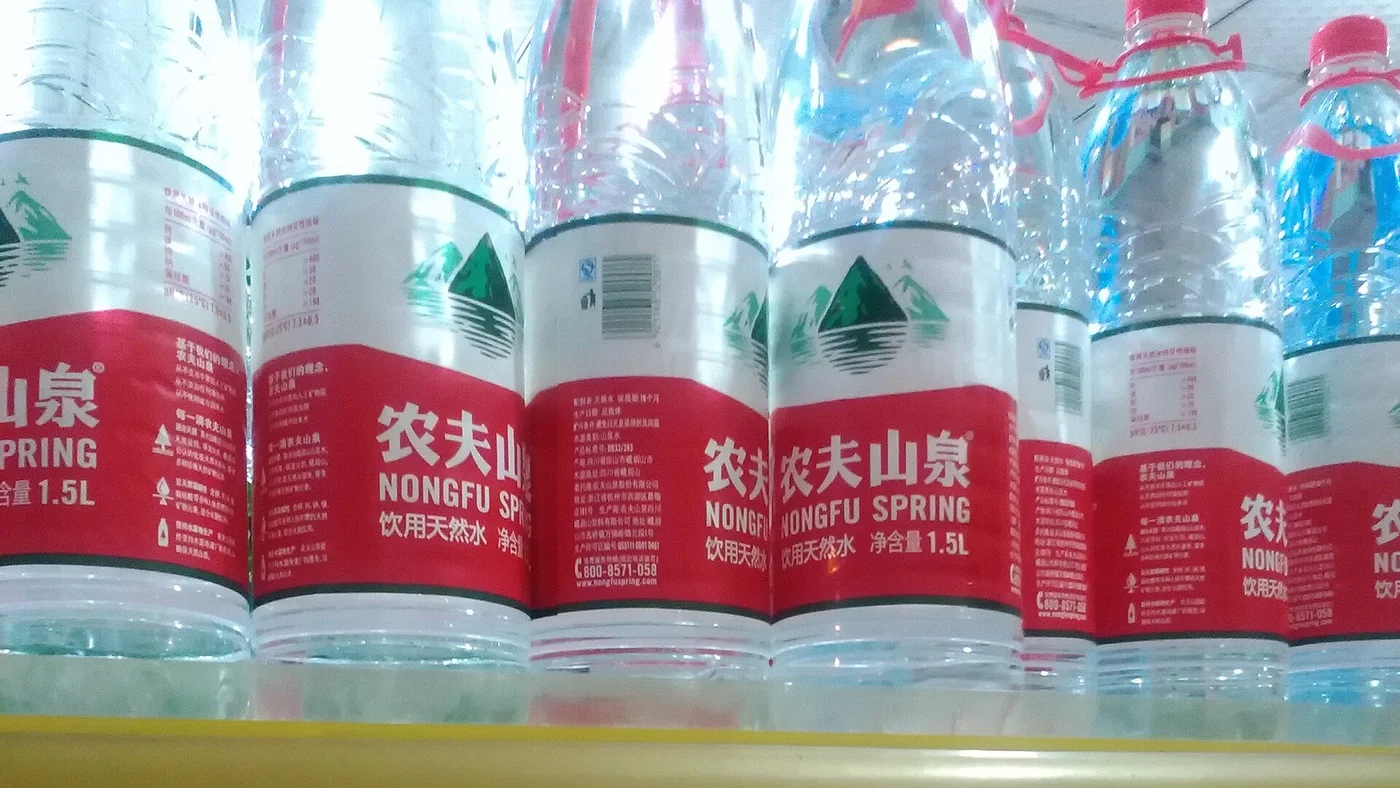
| Nongfu Spring | 农夫山泉 | Red label. The biggest brand. Natural water |
| C'estbon | 怡宝 | Green label. Purified water, very mild |
| Ganten | 百岁山 | Blue label. More minerals |
| Master Kong | 康师傅 | Cheap. Common at station kiosks |
They're all fine quality-wise. If in doubt, grab the red Nongfu Spring.
Three types of label
Chinese bottled water is labeled in three ways. Tastes differ, so it's worth knowing:
- 饮用天然水 (natural drinking water) — Nongfu Spring is this type
- 纯净水 (purified water) — fully filtered by reverse osmosis. Almost no taste
- 矿泉水 (mineral water) — a harder taste
How to buy from a smart fridge (无人柜)
These are popping up everywhere in China, especially in stations, airports, office buildings and attractions. There's no staff and no checkout — you scan a QR code, open the door, take what you want, close it, and you're charged automatically.
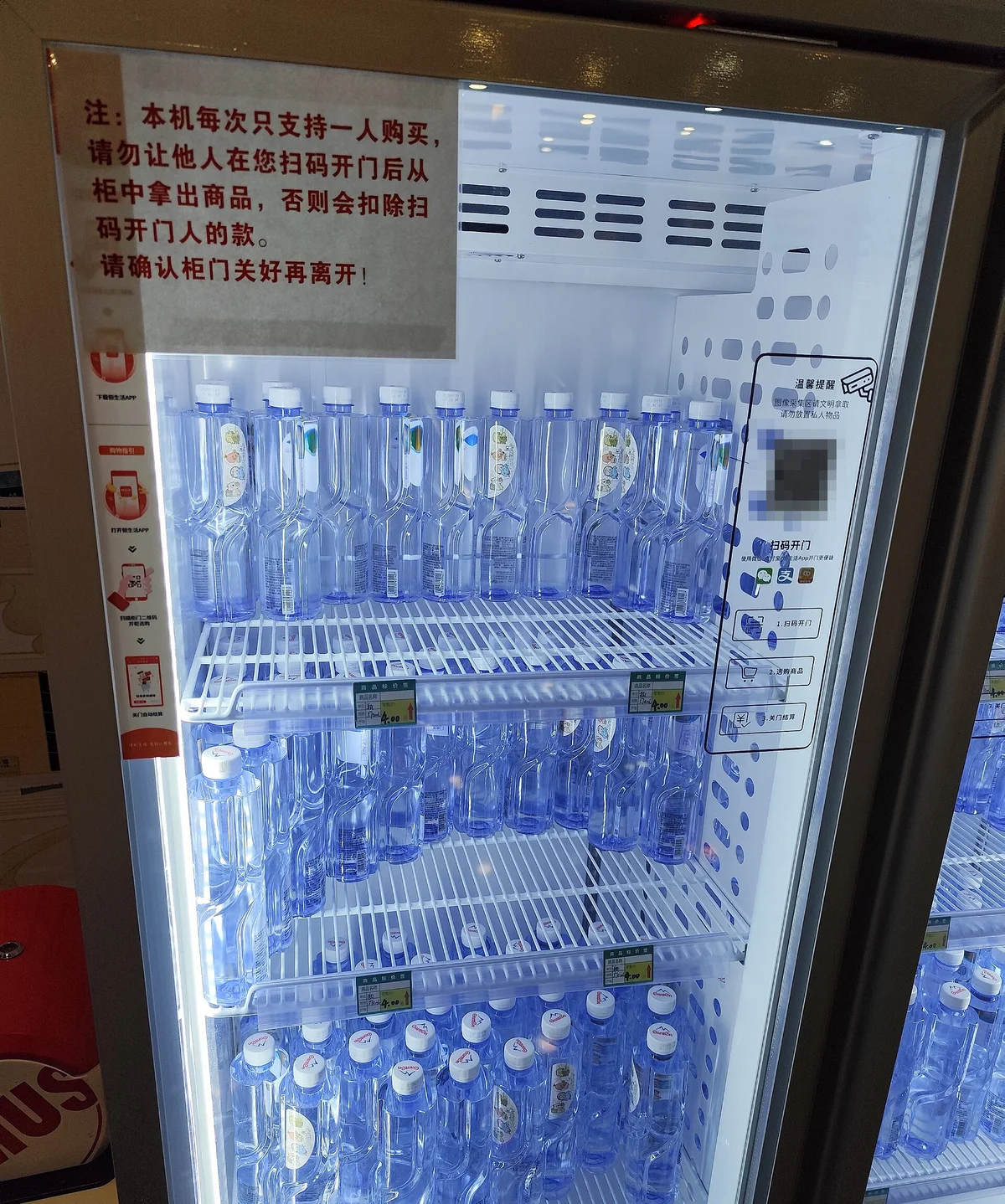
It can feel a bit intimidating the first time, but there are only three steps:
I explain how scan-to-pay works in my guide to using Alipay in China.
If you want cold water
In Chinese supermarkets and convenience stores, room-temperature water is normal. Often there are more unrefrigerated shelves than chilled ones.
For cold water, ask for it 冰的 (bīng de) or take it from the fridge. Eat with Chinese friends, though, and you'll probably be told very seriously that "cold water is bad for you". That's not an exaggeration — it's a widely held health belief.
☕ China drinks hot water — the 热水 culture
This may be the biggest culture shock for visitors.
People in China drink plain hot water, even in midsummer.
热水 (rèshuǐ, hot water) and 开水 (kāishuǐ, boiled water) are part of everyday life. You'll see people in offices and on trains carrying insulated flasks (保温杯) filled with hot water or tea leaves.
Hot-water taps are everywhere
What's impressive is that this culture is built into the infrastructure.
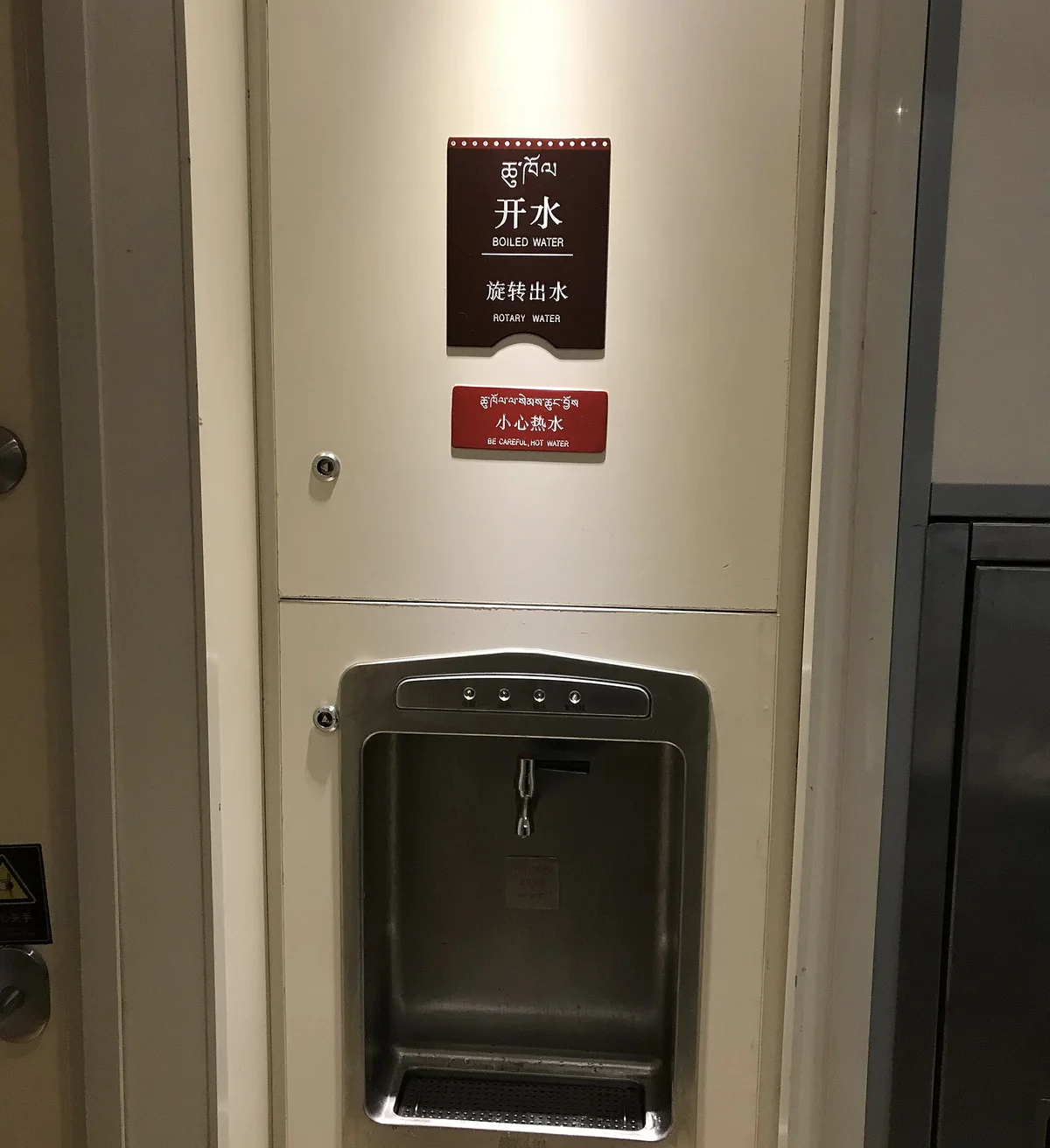
This is the hot-water dispenser on a Chinese train. It's marked "开水 BOILED WATER", and any passenger can fill up for free. Bringing instant noodles and adding hot water here is a classic sight on long-distance trains in China.
What exactly is this "开水"?
This is often misunderstood, so let me be clear.
The hot water from "开水器" boilers in stations and on trains is not specially purified. The source is ordinary municipal tap water (自来水), passed through a simple filter and then boiled in an electric boiler (电茶炉).
It's still perfectly safe because boiling it to 100°C kills germs. But apart from boiling, there's very little treatment. That's why it only comes out piping hot — no cold or room-temperature water.
Where you'll find hot-water dispensers:
- 🚄 Trains (both high-speed and regular)
- 🚉 Station waiting rooms and bus terminals
- ✈️ Airport terminals
- 🏢 Office buildings, universities and hospitals
- 🏨 Hotel rooms (electric kettles)
Instant noodles on the high-speed train really are a common sight. I explain how to book tickets in How to Book China High-Speed Train Tickets on Trip.com.
Order "热水" in a restaurant and you get hot water
This one confuses people. If you ask a Chinese diner for 热水 meaning "water, please", you'll get a steaming glass of plain hot water. Just hot water.
For cold water, say 冰水 (bīngshuǐ). For room temperature, say 常温水 (chángwēn shuǐ).
🍵 Restaurants serve water or tea — watch out for the tea charge
This is the most important part of this article.
When you sit down in a Chinese restaurant, you'll usually be given water or tea. But the rules are different from what you might expect.
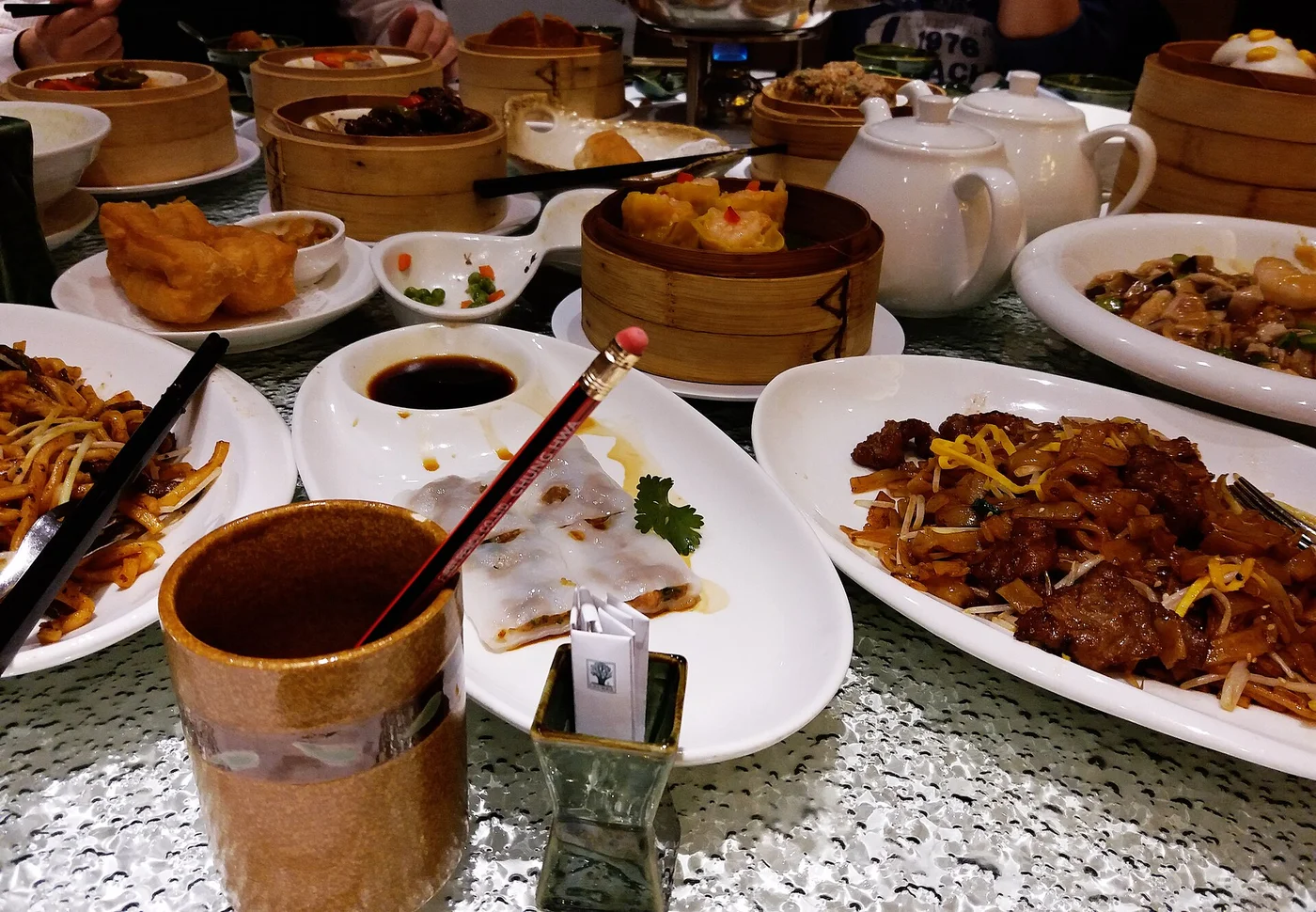
Water is generally free
Water (白开水 / warm water) is generally free. It's boiled-and-cooled water or water from a dispenser. Feel free to drink it, and ask for refills.
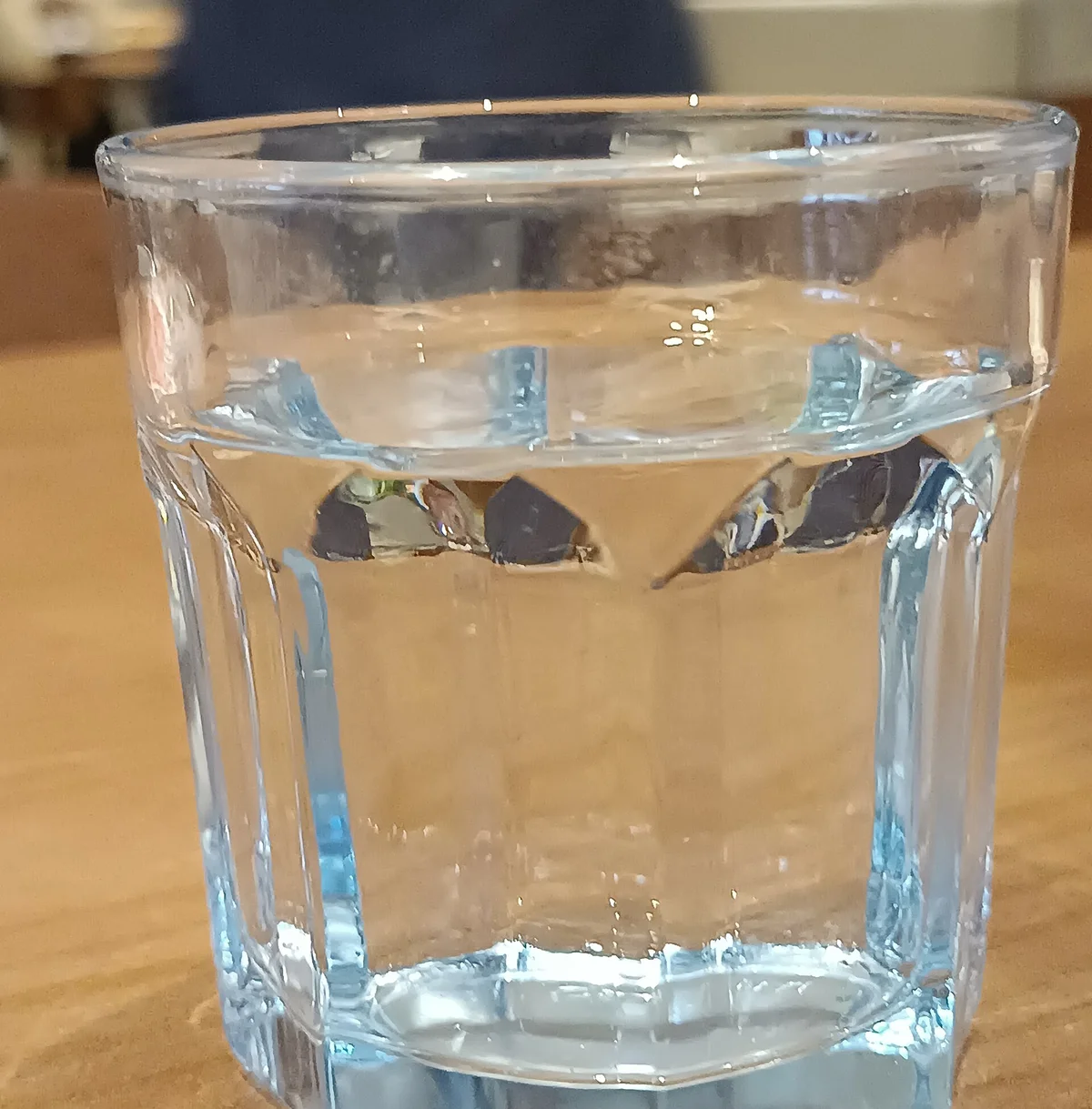
Many places are self-service
Staff won't necessarily bring you water. In Chinese restaurants, water is very often self-service.
- 🥤 A water dispenser and paper cups in a corner — help yourself. Sometimes you can choose hot, room-temperature or cold
- 🫖 A pot or jug already on the table — just pour your own
- 🧂 A dispenser by the counter or next to the condiments and chopsticks — sometimes it holds a light tea, like barley tea, instead of water
The first time, it can feel like "I asked for water and nobody brought it". Before calling staff, look around the room — there's usually a dispenser or jug somewhere. Ask for water in a self-service place and you'll get a friendly point toward the corner 😊
⚠️ Tea may come with a charge (茶位费)
This is the trap.
In Chinese restaurants, especially in the Cantonese region (Guangzhou, Shenzhen and Hong Kong-style places), tea can come with a seat-and-tea charge called "茶位费" (chá wèi fèi).
| Item | Chinese | Typical price | How it's charged |
|---|---|---|---|
| Tea charge | 茶位费 | 2–5 yuan per person | Per person. Added automatically unless you decline |
| Tableware charge | 餐具费 / 消毒餐具 | 1–3 yuan per person | Added if you use sealed, sterilized tableware |
The amount is small — well under a US dollar per person. But many people dislike seeing something on the bill they never asked for. I did too at first.
How to decline — one phrase is enough
If you don't want tea, say one of these:
| Chinese | Pinyin | Meaning |
|---|---|---|
| 不要茶,要白开水 | bú yào chá, yào báikāishuǐ | No tea, just plain water please |
| 喝水就行 | hē shuǐ jiù xíng | Water is fine |
| 不用茶位 | bú yòng chá wèi | No tea charge, thanks |
If you'd rather not say it, showing it in a translation app works fine. I compare translation apps that work in China in this article.
Many restaurants now have you order via QR code. I explain how in How to Order with a QR Code in Chinese Restaurants.
⛲ "直饮水" in stations, airports and parks — tap water you can drink
I said you can't drink tap water — but there are exceptions.
Chinese cities have more and more drinking-water stations where the water has been purified and can be drunk directly.
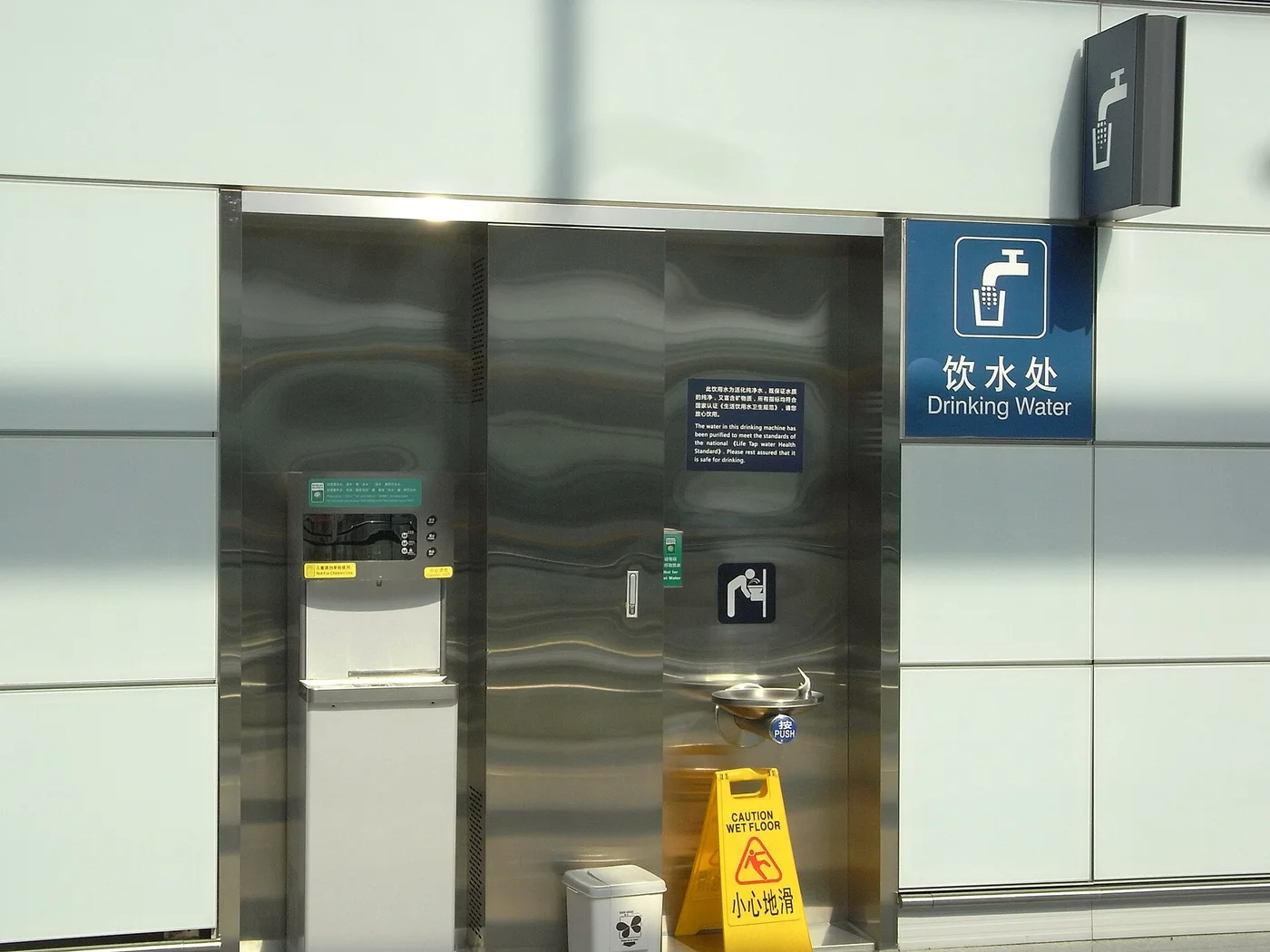
This is a drinking-water point at Beijing Capital International Airport. The sign says "饮水处 Drinking Water", with a dispenser on the left and a push-button fountain on the right. The notice on the wall says the water is "activated purified water that meets the national hygiene standard for drinking water — please drink with confidence".
"直饮水" and "开水" are not the same thing
This is the difference from the previous section. Both are "safe to drink", but they're treated completely differently.
| 直饮水机 (airports, metro stations, etc.) | 开水器 (high-speed rail stations, trains, etc.) | |
|---|---|---|
| Source | Tap water | Tap water |
| Treatment | Pre-filter + purification such as RO or UF membranes + sterilization | Simple filter + boiling only |
| Removes | Residual chlorine, heavy metals, bacteria, cloudiness | Bacteria (by heat) |
| What comes out | Often a choice of room-temperature, cold or warm | Boiling water only |
| Maintenance | Filter changes and sanitizing needed | Almost none |
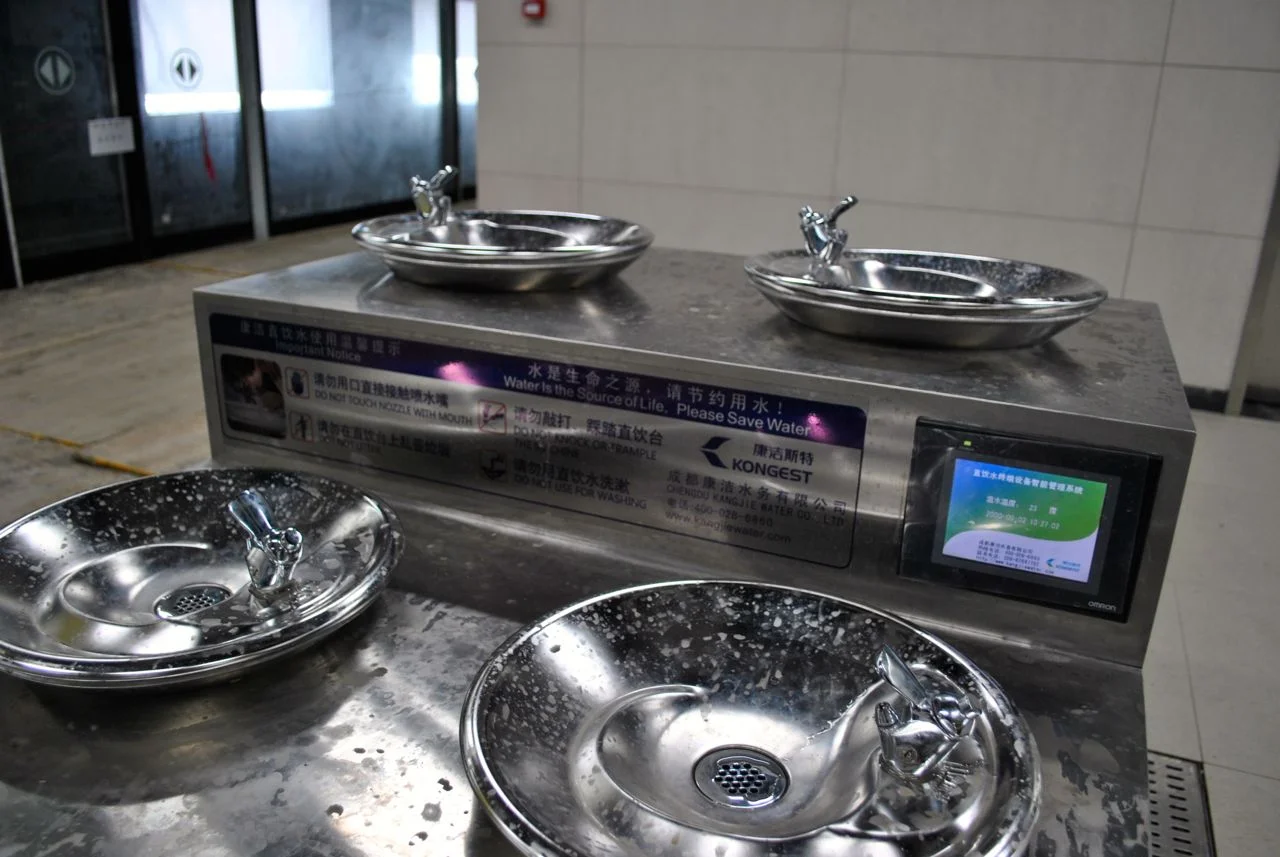
This is a "直饮水" fountain in a metro station. The screen on the right is the purification system's control panel, showing water temperature and filter status. That's why you can drink it without boiling.
How to tell: look at the sign
Whether water is drinkable is decided by the sign on it:
| Sign | Meaning | Drinkable? |
|---|---|---|
| 直饮水 | Direct drinking water | ⭕ Yes |
| 饮水处 / 饮水机 | Drinking water point | ⭕ Yes |
| 可直接饮用 | Can be drunk directly | ⭕ Yes |
| 非饮用水 | Non-drinking water | ❌ No |
| A tap with no sign | Ordinary tap | ❌ Don't drink |
Where you'll find them
- ✈️ Airports — almost every international airport has them, including after security. Bring an empty bottle and fill it up — it's the best way to save money
- 🚄 High-speed rail stations and trains — often "开水" (boiling water) only. If you want room-temperature water, it's quicker to buy a bottle at a kiosk
- 🚇 Metro stations — increasingly installed at stations on newer lines
- 🏞️ Parks — some cities have drinking fountains in parks. I've seen them in well-kept parks in Shenzhen and Shanghai
- 🏫 Universities, hospitals and libraries
🏨 Water in hotels
If you're staying in a hotel, there are three things to know.
1. You get free bottled water every day
From budget business hotels to five-star hotels, free bottled water in the room is standard in China — usually two bottles per person per day, restocked daily.
So as long as you're in a hotel, you'll hardly ever be short of water.
2. There's always an electric kettle
Almost every hotel in China has an electric kettle. In a hot-water culture, it's considered essential.
3. There are cups for brushing your teeth
There'll be glasses or mugs, so if you want to brush your teeth with bottled water, use those. I cover booking and check-in in Can Foreigners Stay in Any Hotel in China?.
🧋 What else can you drink?
A quick look at drinks in China.
For bottled tea, look for "无糖"
Chinese convenience stores have tons of bottled tea — but a lot of it is sweetened.
- 无糖 (wú táng) — unsweetened
- 低糖 / 少糖 — less sugar, but still sweet
- No label — usually sweet
Oriental Leaf (东方树叶) is the go-to unsweetened tea brand.
Bubble tea shops are everywhere
HEYTEA (喜茶), Nayuki (奈雪的茶) and Mixue (蜜雪冰城) are the big three. Mixue is incredibly cheap at around 4–8 yuan a cup, and you'll see it on every corner.
In China, you choose the sugar level and the amount of ice when you order:
- Sugar: 全糖 (full) / 七分糖 (70%) / 半糖 (50%) / 三分糖 (30%) / 无糖 (none)
- Ice: 正常冰 (normal) / 少冰 (less) / 去冰 (no ice) / 温热 (warm)
If you find Chinese drinks too sweet, 七分糖 or 半糖, with 少冰, is a good place to start. For finding good shops, Dianping (大众点评) is very handy.
Beer and coffee
- 🍺 Beer — very cheap at 3–6 yuan in supermarkets. Tsingtao, Snow and Yanjing are the classics. Many are fairly low in alcohol (3–4%)
- ☕ Coffee — Luckin Coffee (瑞幸咖啡) dominates. With app coupons, a coffee costs about 10–15 yuan. Starbucks is in every city too
🤔 Practical rules to avoid an upset stomach
Finally, some advice from experience.
- 🧊 Avoid cut fruit and fresh juice from street stalls — you can't know what water was used to wash it or how long it's been sitting out
- 🧊 Choose where you have ice — chains and shops in malls use purified water in their ice machines. Avoid ice at street stalls
- 🥗 Raw salads are higher risk — in China, vegetables are usually eaten cooked
- 🍢 Choose food that's been cooked through — Chinese cooking is mostly high-heat, which actually makes it fairly safe
- 💊 Bring the stomach medicine you're used to — you can buy it in Chinese pharmacies, but the one you know is best
💬 Useful Chinese phrases
| English | Chinese | Pinyin |
|---|---|---|
| Water, please | 请给我水 | qǐng gěi wǒ shuǐ |
| Cold water | 冰水 | bīngshuǐ |
| Room-temperature water | 常温水 | chángwēn shuǐ |
| Plain boiled water | 白开水 | báikāishuǐ |
| Hot water | 热水 | rèshuǐ |
| Mineral water | 矿泉水 | kuàngquánshuǐ |
| Is this water drinkable? | 这个水能喝吗? | zhège shuǐ néng hē ma? |
| No tea, thanks | 不要茶 | bú yào chá |
| No ice | 去冰 | qù bīng |
| Less ice | 少冰 | shǎo bīng |
For more, see 30 Chinese Phrases That Actually Work in China.
❓ FAQ
Q. Isn't tap water OK for a short trip? A. I don't recommend it. Getting sick can ruin your whole trip, and a bottle of water costs a few yuan. The risk isn't worth it.
Q. Can I rinse my contact lenses with bathroom tap water? A. Please don't. Your eyes are more sensitive than your mouth. Use contact lens solution or bottled water.
Q. Is it worth bringing an empty reusable bottle? A. Yes. You can fill it after airport security, at stations and from hotel dispensers, so you'll spend almost nothing on water. With an insulated bottle, you can even carry hot water like the locals.
Q. Is restaurant water really safe? A. Almost always. Water in Chinese restaurants is boiled-and-cooled or purified dispenser water. Since Chinese people don't drink unboiled water themselves, restaurants wouldn't think of serving it.
Q. Can I drink tap water if I boil it in the hotel kettle? A. I don't recommend it. Boiling kills germs, but rust and heavy metals from pipes and tanks remain. Use the free bottled water in your room instead.
Q. Is the hot water at high-speed rail stations and on trains purified? A. No — it's tap water passed through a filter and boiled. Because it's heated to 100°C it's sterilized, and Chinese people drink it all the time. Just know that it's different from the membrane-purified "直饮水" at airports.
Q. Is it rude to decline the tea charge? A. Not at all. Saying "water is fine" is something Chinese people do too. At dim sum, though, it's more natural to accept it as part of the experience.
Q. What if I'm traveling with children or older relatives? A. Stick to bottled water for everything, including brushing teeth. Be more careful than you would be for healthy adults.
✅ Summary
Water and drinks in China, in a nutshell 💧
- 🚱 Don't drink tap water straight. Locals don't either. Follow this one rule and you're fine
- 🫖 "Just boil it" is only half right. Boiling kills germs, but rust and metals remain. Put bottled water in the kettle
- 🪥 Brushing teeth, rinsing and showering with tap water is fine. Use bottled water only if it bothers you
- 🛒 Bottled water costs 2–3 yuan for 500 ml. It's sold everywhere, so no need to stock up
- ☕ China drinks hot water. Stations, trains and airports have hot-water dispensers — it's boiled tap water, which is why it only comes out boiling
- 🍵 Restaurants serve water or tea. Water is free (often self-service), but tea can cost 2–5 yuan per person as "茶位费". If you don't want it, say "不要茶,要白开水"
- ⛲ Fountains marked "直饮水" are drinkable. That water is membrane-purified. Don't drink from taps without a sign
After more than three years here, my honest feeling is that water in China isn't something to fear — it's something with rules. And there's really just one rule: don't drink straight from the tap.
Not many countries sell bottled water this cheaply and this everywhere. Relax, and enjoy China's food and cities 😊
📚 Read next
- 🍽️ How to Order with a QR Code in Chinese Restaurants — the ordering process itself, including where the tea question comes up
- 🍜 How to Use Dianping in China — if you're worried about ice or raw food, choosing a well-rated restaurant is the surest fix
- 🚻 Toilets in China — the other hurdle that inevitably follows drinking lots of water
- 🗣️ 30 Chinese Phrases That Actually Work in China — including "不要茶" and "去冰"
- 🎒 6 Things You Must Know Before Traveling to China — the other culture gaps worth knowing before you go
Information current as of October 2026. Exchange rates and prices change — figures are approximate.
Image credits: Wikimedia Commons — Nongfu Spring bottle: WhisperToMe (CC0) / "免费领水" machine at Futian Checkpoint station, Shenzhen Metro: BAIZEAKITOIU Mingdym (CC BY-SA 4.0) / glass of water at a Shenzhen restaurant: WEN Menualp TongaUU (CC0) / dim sum table and teapot: Pauloleong2002 (CC BY-SA 4.0) / drinking water point at Beijing Capital International Airport: Zhanyanguange (CC BY-SA 3.0) / direct drinking water fountain in a metro station: Howchou (CC BY-SA 3.0) / boiled-water dispenser on a train: MNXANL (CC BY-SA 4.0) / smart fridge in Shenzhen: ZBMAUE oopAAM (CC0)